
Close your eyes for just a moment and imagine this.
It is early morning, before sunrise, before the world wakes up. You are standing before a simple black stone Shivalinga. A small clay lamp flickers beside it. You pour a cup of water slowly over the stone, and from somewhere deep inside you, the words rise on their own. Om Namah Shivaya. You did not plan to feel anything. But something shifts. Something ancient and enormous and quietly loving notices you.
That feeling is Shiva.
Quick answer. Who is Lord Shiva?
Lord Shiva is the supreme deity of the Shaiva tradition in Hinduism. He represents pure consciousness, spiritual transformation and ultimate liberation. Known as Mahadev, Adiyogi and Nataraja, Shiva is both the fierce destroyer of ignorance and the most compassionate, most accessible of all divine beings.
People often say Shiva is the Hindu god of destruction. That description is not wrong, but it is deeply incomplete. It is like describing the ocean as wet. Technically true. It misses everything that matters.
Shiva is simultaneously the wildest and the most peaceful force in the universe. He is the ash-covered ascetic sitting alone on a Himalayan peak, and the loving father who carries his son on his shoulders. He is the cosmic dancer whose movement holds galaxies in motion, and the silent witness who does not move at all. He is, in the most honest sense, everything, and the space that holds everything.
Shaivism, the tradition centred on Lord Shiva, is one of the major traditions within Hinduism, followed by an estimated 250 to 350 million people worldwide. In the United States alone, more than 2.5 million people identify as Hindu, and Shiva temples now stand in nearly every major American city, from Houston to New York, from Los Angeles to Chicago. And far beyond the Hindu diaspora, millions of yoga practitioners, meditation seekers and spiritual explorers across America are discovering Shiva for the first time, and finding in him something that answers questions they did not even know they were carrying.
The name Shiva itself carries endless depth. It appears among the 1,008 sacred names collected in the Shiva Sahasranama, each name a different facet of the same infinite diamond.
This guide is for all of you. Whether you grew up chanting Om Namah Shivaya before breakfast every morning, or heard Shiva’s name for the first time in a yoga class last week, you are welcome here. Whether you are a devoted pilgrim planning a trip to Kashi, or a curious soul in Minnesota wondering what that statue of the dancing figure with four arms actually means, this is written for you.
We are going to walk through everything together: Shiva’s origins, his symbols, his forms, his family, his sacred texts, his most powerful mantras, his great abodes from Kailash to Kashi, and most importantly, how to bring his presence into your everyday life right where you are.
Let us begin at the very beginning.
Who Is Lord Shiva? Understanding the Supreme Being Beyond Religion
Here is something most articles about Shiva never tell you.
Shiva is not one thing. He is not simply a deity you pray to on Mondays. He is not simply a blue-skinned figure holding a trident. And he is most certainly not simply a destroyer. To understand Shiva, you have to be willing to hold three completely different, and yet completely harmonious, ways of seeing him at the same time.
Think of it like looking at a diamond from three different angles. The diamond does not change. But what you see depends entirely on where you are standing.
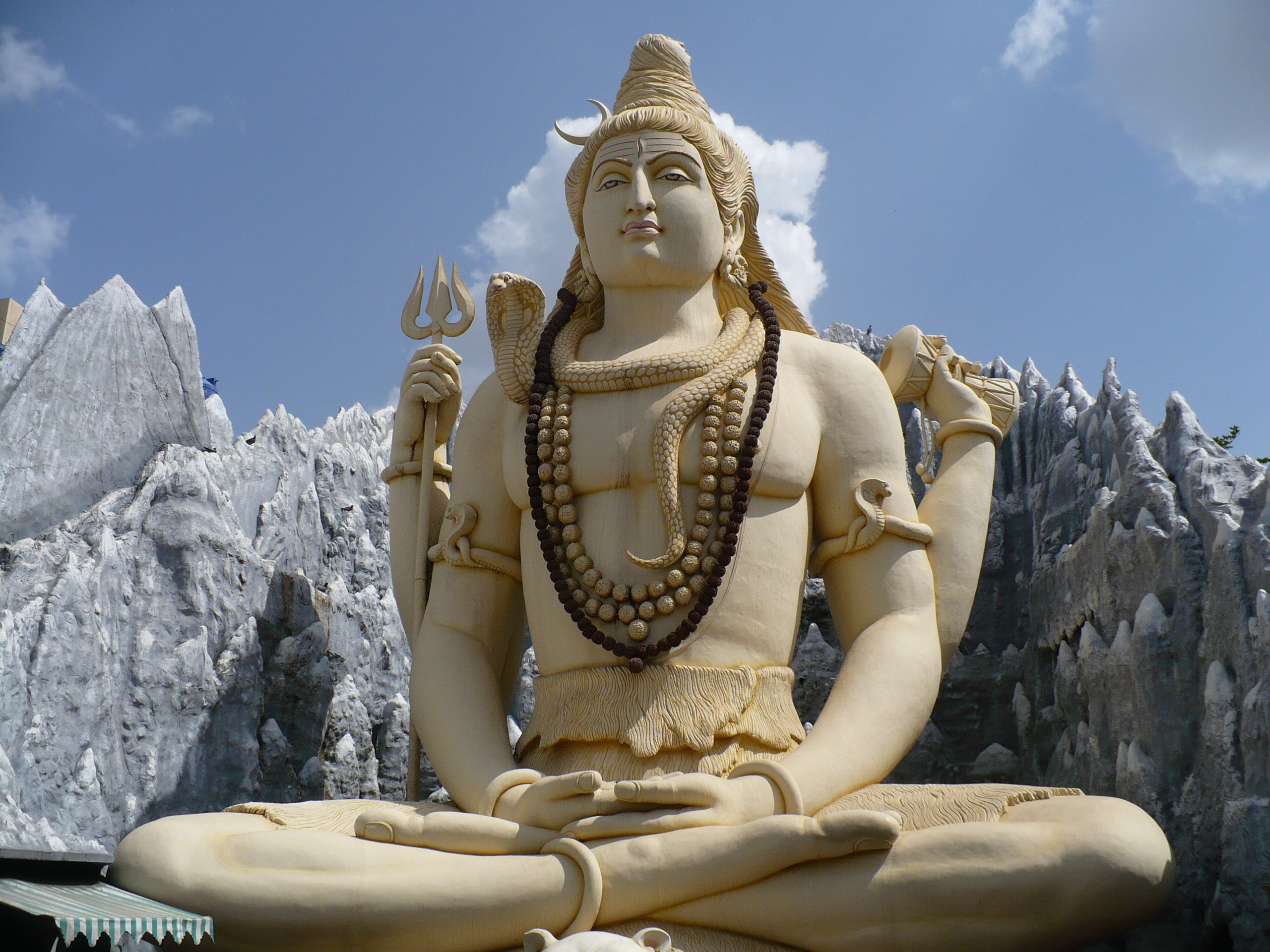
The first layer: Adiyogi, the first yogi
Approximately 15,000 years ago, according to yogic tradition, a being appeared in the upper reaches of the Himalayas unlike anything that had ever walked the earth before.
He came and sat. That was all. He sat in meditation for years, not moving, not eating, not speaking. Those who gathered around him to watch did not know what they were witnessing. Was he alive? Was he a god? Was he simply a man who had gone beyond the boundaries of what men were supposed to be?
The only sign that anything was happening inside him was this: tears rolled from his eyes. Not tears of sadness. Tears of something so immense and so beautiful that the human body could only express it by weeping with joy.
This being is called Adiyogi, the first yogi. He is the one credited with discovering the science of yoga, not as physical exercise, but as a complete technology for human transformation. Eventually, seven dedicated seekers sat before him for 84 years without wavering. On a full moon day now known as Guru Purnima, he turned to face them and began to transmit this knowledge. Those seven became the Saptarishis, the seven great sages, and they carried this science to every corner of the world.
Whether you read this as history or as sacred story, this much is certain: every yoga tradition, every meditation practice, every system of inner exploration that humanity has developed traces its lineage back through this one figure sitting on a mountain, weeping with the joy of what he had found within himself.
The second layer: Mahadev, the Great God of the Puranas
For most of the world’s Hindu devotees, Shiva is known and loved primarily as Mahadev, the Great God. This is the Shiva of the Puranas, of temple worship, of festival celebrations, of family altars and morning prayers.
This Shiva has a family. He is the most devoted husband to the goddess Parvati, a love story so moving that it spans multiple lifetimes and cosmic ages. He is the proud and tender father of Ganesha and Kartikeya. He is the master of Nandi the bull, whose devotion is so pure that he sits forever at Shiva’s gate, simply waiting, needing nothing else.
This Shiva drinks the Halahala, a poison so lethal it could destroy all of creation, to protect the universe during the churning of the cosmic ocean. He holds it in his throat, turning it blue, earning the name Neelakantha, the blue-throated one. He does not do this because he is required to. He does it because compassion is simply what he is.
This is the Shiva that billions of people pour water over every morning, offer Bilva leaves to, bow before, cry to, laugh with, and love with their whole hearts.
The third layer: Paramashiva, the formless infinite reality
And then there is the Shiva that philosophy and the deepest Vedantic tradition point to: Paramashiva. The absolute. The formless. The boundless consciousness from which all existence arises and into which it all eventually returns.
This is not a person. This is not even a deity in the traditional sense. This is reality itself, pure, undivided, infinite awareness that has no beginning and no end.
The Shvetashvatara Upanishad, one of Hinduism’s principal philosophical texts, composed approximately between 400 and 200 BCE, was the first scripture to declare Shiva the supreme cosmic reality. It states with startling clarity:
“Eko hi Rudro na dvitiyaya tasthe.” There is only one Rudra. No second exists beside him.
This is Shiva as Brahman, the ultimate truth underlying everything that exists. In the non-dualistic philosophy of Kashmir Shaivism, your own deepest consciousness and Shiva are not two separate things. The distance between you and Shiva is not measured in miles or lifetimes. It is measured in the distance between your thoughts and the silence underneath them.
What does the name Shiva actually mean?
The Sanskrit word Shiva carries at least three distinct meanings, and all three are true simultaneously.
It means the auspicious one. It means the one who is eternally pure. And in its deepest philosophical sense, it means that which is not, pointing to the great stillness, the vast emptiness, the silent space from which all of creation springs and to which it returns.
In the Rigveda, the oldest of the four Vedas, Shiva does not yet appear by this name. He appears as Rudra. But as the centuries passed, from the Atharvaveda through the Yajurveda and into the Upanishadic age, the fierce Rudra and the auspicious Shiva gradually merged, like two rivers meeting, into the magnificent, many-dimensional Mahadev the world worships today.
Is Shiva a Hindu god, or something more universal?
This is one of the questions people in the United States ask most often, and it deserves a straight answer.
Shiva is worshipped within Hinduism, yes. But the knowledge he represents, the science of inner transformation, the technology of consciousness, the path toward liberation, belongs to no religion. Spiritual teachers across traditions have acknowledged the wisdom the Adiyogi tradition transmits. The fact that meditation and yoga are now practised by tens of millions of Americans of every background and belief system is, in many ways, the continuing ripple of what that first yogi set in motion, in whatever age you choose to place him.
Is Shiva the same as Brahman, the ultimate reality of Vedantic philosophy? In the non-dualistic Shaiva tradition, the answer is an unqualified yes. Shiva is the ultimate reality. Not a representative of it. Not a pathway to it. Shiva is it.
As the spiritual teacher Sadhguru Jaggi Vasudev puts it:
“Shiva is not the God of Hindus alone. He is the ultimate possibility that the human form can attain.”
To understand the full scope of who Shiva is, where he stands in the cosmic order and what role he plays in the universe’s ongoing story, we need to take one more step outward. We need to see where Shiva sits within the grand design of existence itself.
That is where the Trimurti comes in.
The Holy Trinity: Brahma, Vishnu and Shiva
If you have ever watched a candle flame, the wick creating the flame, the flame burning steadily, the wax finally consumed and the flame going out, you have already understood the Trimurti.
Creation. Preservation. Dissolution.
These are not just events that happen to candles. They are the three fundamental movements of everything that exists, from galaxies to seasons to the thoughts in your mind. In Hindu cosmology, three divine beings embody these three movements: Brahma the creator, Vishnu the preserver, and Shiva the transformer who dissolves what is complete so that new life can begin.
Why Shiva is not simply a destroyer
Here is where most people, and most articles, get it wrong.
When we say Shiva is the destroyer, the English word immediately conjures images of violence, of endings, of loss. But that is not what samhara means in the Vedic sense at all.
When autumn arrives and the leaves fall from the trees, the tree is not being destroyed. It is releasing what it no longer needs so that spring can bring something entirely new. When you let go of an old habit, an old fear, or an old version of yourself that no longer fits, that is not destruction. That is liberation.
That is Shiva’s work.
Shiva dissolves what is complete, what is stagnant, what is holding back new growth. He does not end things randomly or cruelly. He transforms them, returning them to the vast, open space of potential from which Brahma can create again. The cycle is not creation leading to destruction. It is creation leading to transformation leading to new creation, endlessly, without interruption.
This is why devoted Shiva worshippers do not approach him with fear. They approach him with the deepest kind of trust, the trust that whatever he dissolves in your life is making room for something greater.
The story that says it all: the Lingodbhava
There is an ancient story that captures Shiva’s place in the cosmic order better than any philosophical explanation ever could.
Once, long before the universe as we know it existed, Brahma and Vishnu fell into an argument. Each claimed to be the supreme power. Brahma pointed to his power of creation. Vishnu pointed to his power of preservation. Neither would yield.
In the midst of their debate, something extraordinary happened.
Between them appeared an infinite pillar of blazing light, a column of fire so vast it seemed to have no beginning above and no end below. It simply was. Shimmering, roaring, absolute.
Brahma, in the form of a swan, flew upward for thousands of years trying to find its top. He could not.
Vishnu, in the form of a great boar, dug downward for equal time trying to find its base. He could not.
Only when both surrendered, only when they stopped trying to measure and master and simply bowed, did the pillar of light resolve into the form of Lord Shiva.
This pillar of light is the Jyotirlinga, the cosmic column of infinite radiance. The teaching it carries is simple and shattering at the same time: Shiva is not comparable to creation or preservation. He is the infinite reality that holds them both.
The ego, represented in the story by the argument itself, dissolves not through force but through surrender.
The scale of cosmic time
To appreciate how vast Shiva’s role in the universe truly is, consider this.
In Vedic cosmology, time is measured not in years but in Kalpas. One Kalpa, a single cosmic day in the life of Brahma, equals 4.32 billion human years. At the end of each Kalpa, the universe undergoes mahapralaya, the great dissolution, through Shiva’s dissolving, renewing energy. Everything returns to its source. And then, from that vast silence, Brahma creates again.
Modern science estimates the age of the Earth at approximately 4.5 billion years, a number not far from one Vedic Kalpa. Ancient seers and modern physicists, arriving at neighbouring numbers through completely different paths.
The True Origins of Lord Shiva: From Vedic Rudra to Mahadev
If a child ever looks up at you and asks, “But where did Shiva come from? Who made him?”, smile. Because that question has been asked by the greatest minds in human history. And the answer that comes back from the oldest scriptures ever written is both simple and staggering.
No one made him. He simply is.
But to understand what that truly means, and to trace the journey of how Shiva came to be known and loved across thousands of years of human civilisation, we have to go back. All the way back.
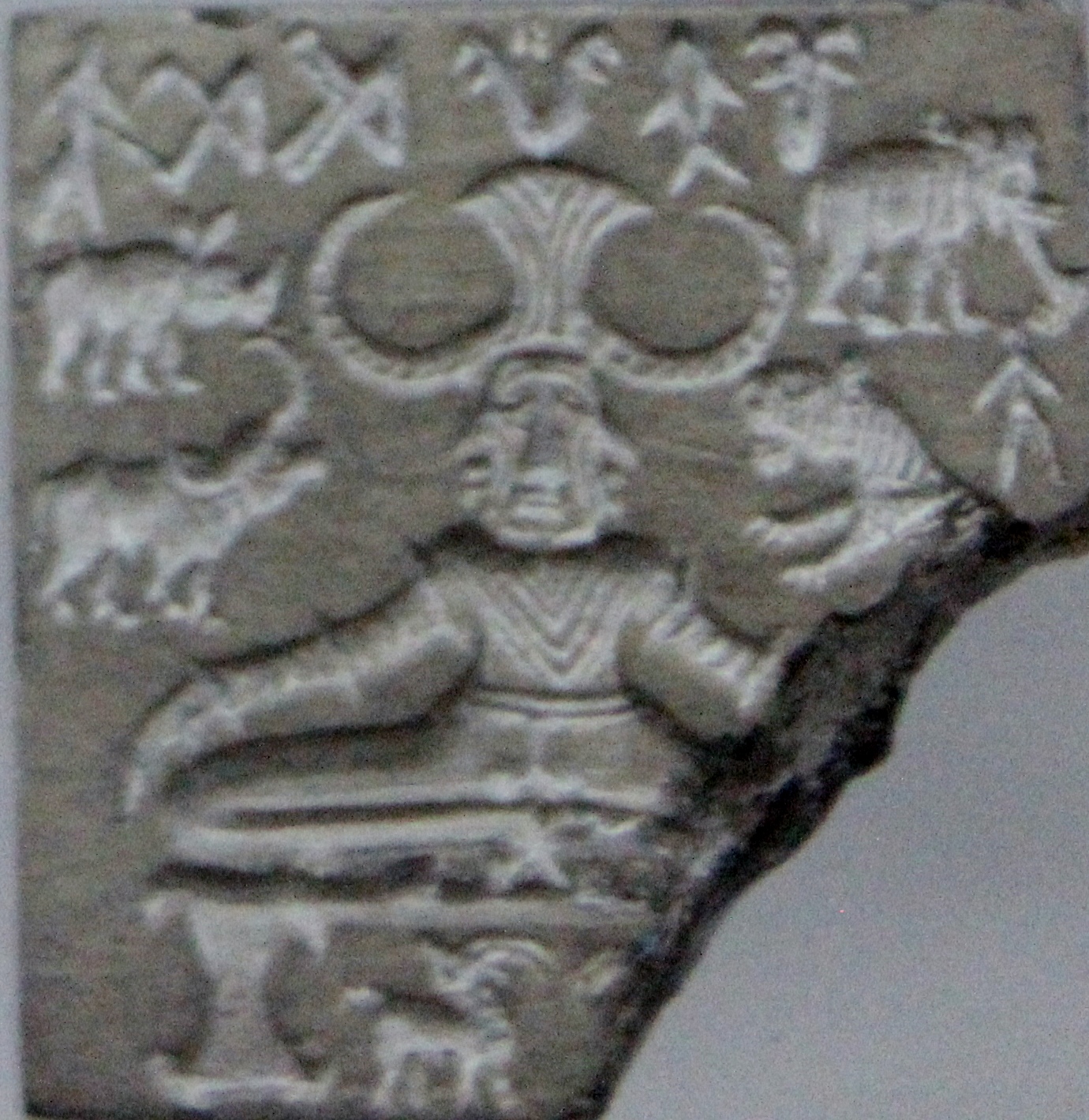
It begins with Rudra, the one who roars
Long before the name Shiva appeared in any sacred text, there was Rudra.
In the Rigveda, the oldest of humanity’s four Vedas, composed somewhere between 1500 and 1200 BCE, a wild, fierce and deeply mysterious deity strides through the hymns like a storm that cannot be contained. His name is Rudra.
The name itself carries multiple meanings, and all of them are true simultaneously. It means the roarer, the thunder of cosmic power that shakes the universe awake. It is read as the one who makes you weep, not from cruelty, but from the overwhelming force of his presence. And in the most compassionate reading, it means the remover of suffering, the one who tears away pain at its root.
In the Rigveda, Rudra appears as a healer of extraordinary power, Vaidyanatha, the lord of medicine and remedies. He is the protector of cattle and communities. He is a master archer whose arrows can bring both affliction and healing. He is the father of the Maruts, the storm winds that sweep across the sky in wild, unstoppable groups.
He is not a comfortable deity. Even in the Rigveda, devotees approach Rudra with reverence mixed with awe, asking him to be gentle, to turn his fierce gaze away from their homes and children. A famous Rigvedic prayer asks him simply: do not harm our children, do not harm our grandchildren, do not harm our lives.
That prayer tells you everything about how ancient humanity experienced this force: immense, untamed, powerful beyond measure, and yet capable of the deepest mercy when approached with humility.
The Sri Rudram: the most sacred hymn to Shiva
Within the Krishna Yajurveda’s Taittiriya Samhita lives one of the most extraordinary pieces of sacred literature in human history: the Sri Rudram.
This hymn, chanted for well over two and a half thousand years, is not just a prayer. It is a complete revelation of Rudra’s nature: his presence in every corner of existence, his dwelling in every form of life, his compassion hidden beneath his fierce exterior. Its Shatarudriya passage is a long litany of salutations, naming Rudra in every form he takes, from the hunter to the healer, the storm to the sweet breeze. Tradition counts his names there in the hundreds.
The Sri Rudram is still chanted in Shiva temples across the world every single day. In South India, in Nepal, in Bali, in Hindu communities across the United States, this ancient hymn continues to vibrate through the air wherever Shiva is worshipped. That is not tradition for tradition’s sake. That is the recognition that some words carry a living energy that time cannot diminish.
From Rudra to Shiva: the great merging
As the centuries moved forward, from the Rigveda through the Atharvaveda, from the Yajurveda into the age of the Upanishads, something beautiful happened. The fierce Rudra and the auspicious, peaceful Shiva began to merge. Like two rivers that have been running parallel for miles, they came together into one magnificent, many-dimensional being.
By the time of the Shvetashvatara Upanishad, the transformation was complete. Rudra and Shiva were fully one, and that one was now recognised as the supreme cosmic reality, not just a powerful deity among many, but the infinite ground of existence itself.
Svayambhu: the one who was never born
Here is perhaps the most important thing to understand about Shiva’s origins, and something most introductory articles never explain clearly.
Shiva is described in the sacred texts as Svayambhu: self-manifested. He was not created. He has no parent, no origin point, no moment of birth. He simply is, eternally, without beginning or end.
The Shiva Purana states this with complete clarity: Shiva existed before Brahma created anything. Before the universe took shape. Before time began its counting. Shiva is the ground upon which all of creation stands, and that ground was never itself created.
This is not a myth asking you to suspend reason. It is a philosophical statement of the highest order, pointing to the same question modern physics asks: what existed before the beginning? The Shaiva answer, given thousands of years ago, is that what existed before creation was the infinite, unmanifest awareness the tradition calls Shiva.
The sacred texts that carry his story
Over thousands of years, the story of Shiva has been told, retold, deepened and illuminated through a remarkable body of sacred literature. The map below is the one this guide will return to again and again.
The Shiva Purana stands as the most complete and beloved account of Lord Shiva’s life, teachings and divine nature. It contains 24,000 verses organised into seven sections called samhitas:
| Samhita | Primary focus |
| Vidyeshvara Samhita | The nature of Shiva as supreme reality, philosophical foundations |
| Rudra Samhita | Shiva’s manifestations, his marriage to Parvati, the births of Ganesha and Kartikeya |
| Shatarudra Samhita | The hundred forms of Rudra and their significance |
| Kotirudra Samhita | The Jyotirlinga shrines and their origin stories |
| Uma Samhita | The goddess Uma and Parvati: her nature, her devotion, her divine power |
| Kailasa Samhita | Sacred Mount Kailash and the spiritual science of liberation |
| Vayaviya Samhita | Philosophical teachings about Shiva’s supreme nature |
The Shiva Purana covers everything: Shiva’s cosmic battles, his divine marriages, the creation of sacred pilgrimage sites, the science of Shivalinga worship, the stories of his greatest devotees, and the deepest teachings about liberation. For any devotee in the United States wanting to go deeper into Shiva’s world, this is the text to begin with.
The Linga Purana contains about 11,000 verses and has a more specific focus: the Shivalinga itself, its cosmic origin, its sacred forms, and the philosophy and procedure of its worship.
The Skanda Purana, the largest of all the Puranas, carries the extensive geography of Shaiva sacred sites, including the Kashi Khanda’s teachings about Varanasi.
The epics hold their own Shiva treasures: the Mahabharata’s Vana Parva contains long Shiva discourses, and the Ramayana gives us Rameshwaram, where Rama himself worshipped Shiva before crossing to Lanka.
The Sacred Symbolism of Lord Shiva: Every Element Has a Meaning
Picture this.
You are standing in front of a large, beautifully rendered image of Lord Shiva. Maybe it is a painting on the wall of a temple. Maybe it is a statue on a friend’s home altar. Maybe it is the image on your phone screen that you stopped to look at more carefully than usual today.
Your eyes move across the image slowly. There is so much happening. A river flowing from tangled hair. A crescent moon resting like a crown above the forehead. A third eye closed at the centre of the brow. A serpent coiled around the neck like a living necklace. Skin the colour of ash or smoke. A trident held steady in one hand. A small drum in another. A tiger skin beneath him. Fire in the background.
Here is what most people do not realise when they look at this image for the first time.
Nothing in it is decoration. Not one single element was placed there casually or for artistic effect. Every symbol, every colour, every object, every posture, is a complete teaching. Shiva’s form is not a portrait. It is a scripture written in the language of images. Once you learn to read it, you will never look at it the same way again.
Let us read it together, slowly, from top to bottom.
The crescent moon: Chandrashekhara
Shiva with the moon in his hair is one of the most searched and most misunderstood images in all of Hindu iconography.
The moon in Indian philosophy represents the mind, specifically the mind in its sixteen phases, cycling between clarity and darkness just as the moon moves between fullness and invisibility. A full-moon mind is overwhelmed, reactive, pulled in every direction by emotion and sensation.
Shiva wears only a crescent, a thin sliver of the moon. This is not because he has diminished the mind. It is because he has mastered it. He keeps just enough mind to function in the world, to speak, to love, to act, but he is never controlled by it. The mind sits on his head like an ornament he chose to wear, not a force that drives him.
For those of us whose minds feel like a full moon some days, chaotic and brilliant and overwhelming, this image is both a comfort and an aspiration.
The third eye: Trinetra
Between his two physical eyes sits the most famous symbol in all of Shiva’s iconography: the third eye.
The two physical eyes see the world of form and time, the world you can touch and measure. The third eye sees what lies beneath all of that: the unchanging truth behind the changing surface of existence. It is the eye of inner wisdom, of perception that cuts through illusion, maya, the way a single beam of light cuts through darkness.
In the stories, when Shiva opens his third eye in full intensity, it burns away whatever stands before it. This is not violence. The fire of the third eye burns one thing: ignorance. It cannot harm truth. It can only destroy what is false.
Every human being has this third eye, this capacity for inner perception that goes beyond what the senses can show. Shiva’s Trinetra is a reminder that it exists in you too, waiting to be awakened.
The serpent Vasuki: Nagabhushana
The great serpent coils around Shiva’s neck, hood spread wide, gaze steady. Most people’s first instinct is fear. A snake at the throat feels dangerous.
That is precisely the point.
The serpent represents the ego, the fundamental human fear of death, of loss, of the unknown. Shiva wears it at his most vulnerable point, completely at ease. He has not killed the ego. He has understood it so completely that it holds no power over him anymore. The snake that would terrify anyone else becomes, for Shiva, simply a garland.
The serpent also represents kundalini shakti, the coiled spiritual energy that lies dormant at the base of the human spine, waiting to be awakened through yogic practice. On Shiva, it is already fully awake, resting in its natural state of conscious alertness.
The trident: Trishula
The Trishula, Shiva’s three-pronged trident, is his most recognisable weapon, and like everything else about him, it carries several layers of meaning at once.
The three prongs represent his authority over the three gunas, the three fundamental qualities that make up all of material existence: sattva, clarity and light; rajas, activity and passion; tamas, inertia and heaviness.
The Trishula also represents mastery over the three states of consciousness every human being cycles through daily: waking, dreaming and deep dreamless sleep. Shiva holds all three on the tips of his trident, fully conscious in all three, never lost in any of them.
The damaru drum: the sound of creation
In one of his upper hands, Shiva holds a small hourglass-shaped drum called the damaru. When he shakes it, it produces a sound, and according to tradition, that sound is the very first sound of creation.
Sanskrit grammar itself is said to have been transmitted through the fourteen rhythmic patterns of Shiva’s damaru, preserved in the Maheshvara Sutras that the great grammarian Panini used as the foundation of Sanskrit linguistics.
Look at the shape of the damaru carefully. It narrows at the centre and expands at both ends, mirroring the shape of the expanding universe itself. The drum of creation is shaped like the cosmos it sang into being.
Sacred ash: Vibhuti
Shiva’s body is covered in vibhuti, sacred ash. Not the ash of wood or incense, but specifically the ash of cremation grounds. This is the symbol that surprises Western observers most, and it is also the one that carries the deepest teaching.
Everything you own, everything you have built, everything you are attached to in this physical life, will all, eventually, become ash. Shiva wears this reminder directly on his skin, every moment, without distress. He is not morbid. He is free. Free from the anxiety of holding on. Free from the fear of losing. The ash says: I know what this body is. I know what this world is. And I am at peace with it completely.
Vibhuti is offered to devotees in temples as a sacred blessing, a small mark on the forehead that carries the same teaching. When you receive it, you are receiving a reminder of what is permanent and what is not.
The river Ganga: Gangadhara
Hidden within Shiva’s wild, matted hair flows the river Ganga.
According to the Puranas, the Ganga originally flowed only in the heavens. When she was brought to earth to purify the ashes of sixty thousand ancestors, she fell with such force that she would have shattered the earth on impact.
Only Shiva could receive her. He caught the entire cosmic river in his hair, absorbing her force gently, then releasing her in streams the earth could hold.
This is a teaching about how divine grace works. The full force of the infinite, received directly and without preparation, would overwhelm the human mind completely. Shiva holds it, and releases it gently, in the form each devotee can actually receive.
The tiger skin: Vyaghracharmambara
Shiva sits upon, and is sometimes draped in, the skin of a tiger. The tiger in Vedic symbolism represents the most powerful animal instincts: primal desire, aggression, territorial fear, survival-driven thinking.
Shiva does not fight these forces. He masters them so completely that they become his seat. What once would have devoured a lesser being, Shiva sits upon in perfect peace.
The blue throat: Neelakantha
During the Samudra Manthan, the cosmic churning of the great ocean by the gods and demons in search of the nectar of immortality, a terrible poison called Halahala emerged first. It was so potent that its fumes alone were beginning to destroy all of creation.
Every divine being fled from it. No one could touch it. No one had the capacity to absorb it.
Shiva stepped forward.
He took the poison into his palm and drank it, all of it, consuming the world’s most lethal toxin so that creation could survive. Parvati, watching in terror, pressed her hand against his throat before it could reach his heart, holding the poison there. His throat turned permanently, brilliantly blue.
This is Neelakantha, the blue-throated one. And this story is not just myth. It is a portrait of the highest possible compassion: the willingness to take the world’s worst poison into yourself so that others may live.
The ash-grey and blue skin, and the fierce form
When Shiva is depicted with ash-grey skin, it reflects the vibhuti covering his body, placing him beyond the birth-and-death cycle, beyond the world of appearances. When shown with a blue throat specifically, as Neelakantha, only that aspect is blue: the place where the world’s poison was held in compassion.
And sometimes you will see images of angry Lord Shiva, eyes blazing, third eye crackling, the fearsome Rudra aspect fully present. This form can feel intimidating the first time you encounter it.
But here is the truth about Rudra’s anger.
It is not the anger of ego or wounded pride. It is the anger of a surgeon who sees a disease destroying someone they love, and acts with fierce, focused precision to remove it. Rudra’s force is never random, never cruel, never self-serving. It is always targeted at one thing: the cause of suffering. Whatever creates pain, whatever perpetuates ignorance, whatever keeps a soul bound and small, that is what the fierce Rudra removes.
The Shiva Yantra: sacred geometry
Beyond the personal form of Shiva, there is another sacred tool through which his energy is honoured: the Shiva Yantra.
A yantra is a geometric diagram, a visual representation of divine energy in concentrated form. The Shiva Yantra places the Shivalinga at its absolute centre, the axis point of all existence. Surrounding it, layers of triangles, circles and lotus petals radiate outward, representing the successive layers of creation moving from pure consciousness at the centre to the manifest physical world at the edges.
Meditating upon a Shiva Yantra, simply resting your gaze at its centre point, is said to draw the mind inward naturally. Many devotees in the United States keep a brass or copper Shiva Yantra on their home altar alongside a Shivalinga: the yantra representing the geometric dimension of Shiva’s presence, the linga the formless dimension.
Reading the complete portrait
Now go back to that image, the one you were standing before at the beginning of this section.
The crescent moon says: I have mastered my mind.
The third eye says: I see what is real beneath what appears.
The serpent says: I have made peace with what terrifies others.
The trishula says: I hold the three forces of existence in perfect balance.
The damaru says: I am the sound from which all sound came.
The ash says: I know what this body is, and I am free.
The Ganga says: I hold the infinite gently, and offer it in the form you can receive.
The tiger skin says: what would devour others is simply where I sit.
The blue throat says: I will take your worst poison into myself so you can live.
This is not a random collection of objects carried by an ancient god.
This is the most complete self-portrait of liberated consciousness ever expressed in visual form.
The Sacred Manifestations and Iconic Forms of Lord Shiva
Shiva does not come to everyone in the same way.
To the philosopher, he comes as formless infinite consciousness. To the devotee, he comes as the loving Mahadev with his family on Kailash. To the warrior, he comes as the fierce Rudra. To the artist, he comes as the magnificent Nataraja. To the broken-hearted, he comes as the compassionate Bholenath, the simple, innocent one who never turns anyone away.
Every form of Shiva is a different doorway into the same divine reality. He takes each shape to meet a different kind of seeker exactly where they are.
Nataraja: the cosmic dancer who holds the universe in motion
Close your eyes for a moment and imagine a figure dancing.
Not dancing for an audience. Not dancing for applause or celebration in the ordinary sense. Dancing because the dance itself is existence. Because every step forward is a galaxy being born, and every step back is a star completing its journey. Because the movement of the arms holds the entire architecture of time within it, and the stillness at the centre of the spinning figure is the most complete peace that has ever existed.

That is Nataraja.
The name itself is made of two Sanskrit words: Nata, dance, and Raja, king or lord. Nataraja means the Lord of the Dance. And the dance he performs has a name too: the Ananda Tandava, the dance of bliss.
But do not let the word bliss make you think this is a gentle, soft thing. The Ananda Tandava is the most powerful event in the universe. It is not something Shiva performs for the universe. It is the universe. Every atom that has ever existed, every galaxy spinning through space, every breath you have ever taken, all of it is one continuous movement within this dance.
The five cosmic acts, encoded in one pose
The Nataraja form is not artistic whimsy. It is a precise diagram of how the universe operates, expressed through the human form. Every position of every hand and foot encodes one of the five fundamental cosmic acts:
| Cosmic act | Sanskrit name | What it means | Where it appears in the pose |
| Creation | Srishti | The universe comes into being | The upper right hand holds the damaru drum, whose first beat is the first sound of creation |
| Preservation | Sthiti | All created things are sustained | The lower right hand makes the abhaya mudra, palm outward, fear not, the gesture of protection |
| Dissolution | Samhara | What is complete returns to source | The upper left hand holds Agni, the fire that dissolves what has run its course |
| Concealment | Tirobhava | The divine hides within ordinary life | The right foot presses upon Apasmara, the dwarf of spiritual forgetfulness, the veil of maya |
| Liberation | Anugraha | The path home is always open | The raised left foot points upward, the direction of moksha, always available to any soul that turns toward it |
Five acts. Five movements. The complete story of every universe that has ever existed, told in the angle of one raised foot, the curve of one open palm, the tilt of one hand holding fire.
The dwarf beneath his foot: Apasmara
Look closely at the base of any Nataraja statue. Beneath Shiva’s right foot, you will see a small figure, a dwarf pressed into the earth, looking somewhat dazed.
His name is Apasmara, and he is one of the most important, and most overlooked, figures in Hindu iconography.
Apasmara is not an enemy defeated in battle. He is the personification of spiritual forgetfulness, that part of human consciousness that forgets, again and again, that it is divine. The part that wakes up in the morning consumed by anxiety about things that ultimately do not matter. The part that spends an entire lifetime searching outside itself for something that was always already present within.
Shiva does not destroy Apasmara. He simply stands upon him, holds him in place, because if spiritual forgetfulness were completely destroyed, there would be no more seeking, no more longing, no more of that beautiful human journey from confusion toward clarity. Apasmara must be held, not eliminated. And while Shiva holds him, the dance of grace continues for every soul still on its way home.
The ring of fire
Surrounding the entire dancing figure is a ring of flames, the Prabhamandala. This is the fire of consciousness itself, the radiant energy of awareness that contains and illuminates all of existence. It is also the fire of time, the cosmic cycle within which everything arises and passes away.
Shiva dances within this fire completely at ease. He is not burning. He is not threatened. He is the source of the flame.
Where science and spirituality meet: Nataraja at CERN
Here is something that will stop you in your tracks.
In 2004, the government of India gifted a 2-metre tall bronze Nataraja statue to CERN, the European Organization for Nuclear Research in Geneva, Switzerland, home of the Large Hadron Collider. This is the facility where scientists smash subatomic particles together at near light-speed to understand the fundamental nature of matter and energy.
Why would the world’s most advanced physics laboratory want a statue of a dancing Hindu deity?
Because physicist Fritjof Capra had already answered that question decades earlier. In his landmark book The Tao of Physics, Capra recognised that the ancient image of Nataraja was, in precise and uncanny detail, a perfect metaphor for what quantum physics had discovered about the nature of reality at the subatomic level:
“Modern physics has shown that the rhythm of creation and destruction is not only manifest in the turn of the seasons and in the birth and death of all living creatures, but is also the very essence of inorganic matter. Shiva’s dance is the dance of subatomic matter.” (Fritjof Capra, The Tao of Physics)
Subatomic particles are not stable objects sitting quietly in space. They are constantly being created, annihilated and recreated in an endless, dynamic dance of energy. Matter itself is not a thing. It is a process. A movement. A dance.
The Nataraja at CERN is not a decoration. It is a recognition, one of the most striking in modern scientific history, that ancient wisdom and contemporary physics are, at their deepest level, describing the same reality.
The Nataraja form reached its artistic perfection during the Chola dynasty, 9th to 13th century CE, of South India. Chola bronzesmiths created Nataraja sculptures of such extraordinary beauty that they remain among the most celebrated works of art in human history, held today in the British Museum in London, the Metropolitan Museum of Art in New York, the Guimet Museum in Paris, and the National Museum in India.
Ardhanarishvara: when Shiva and Shakti become one
There is an image in Hindu sacred art so radical, so quietly revolutionary, that even after thousands of years it continues to stop people in their tracks.
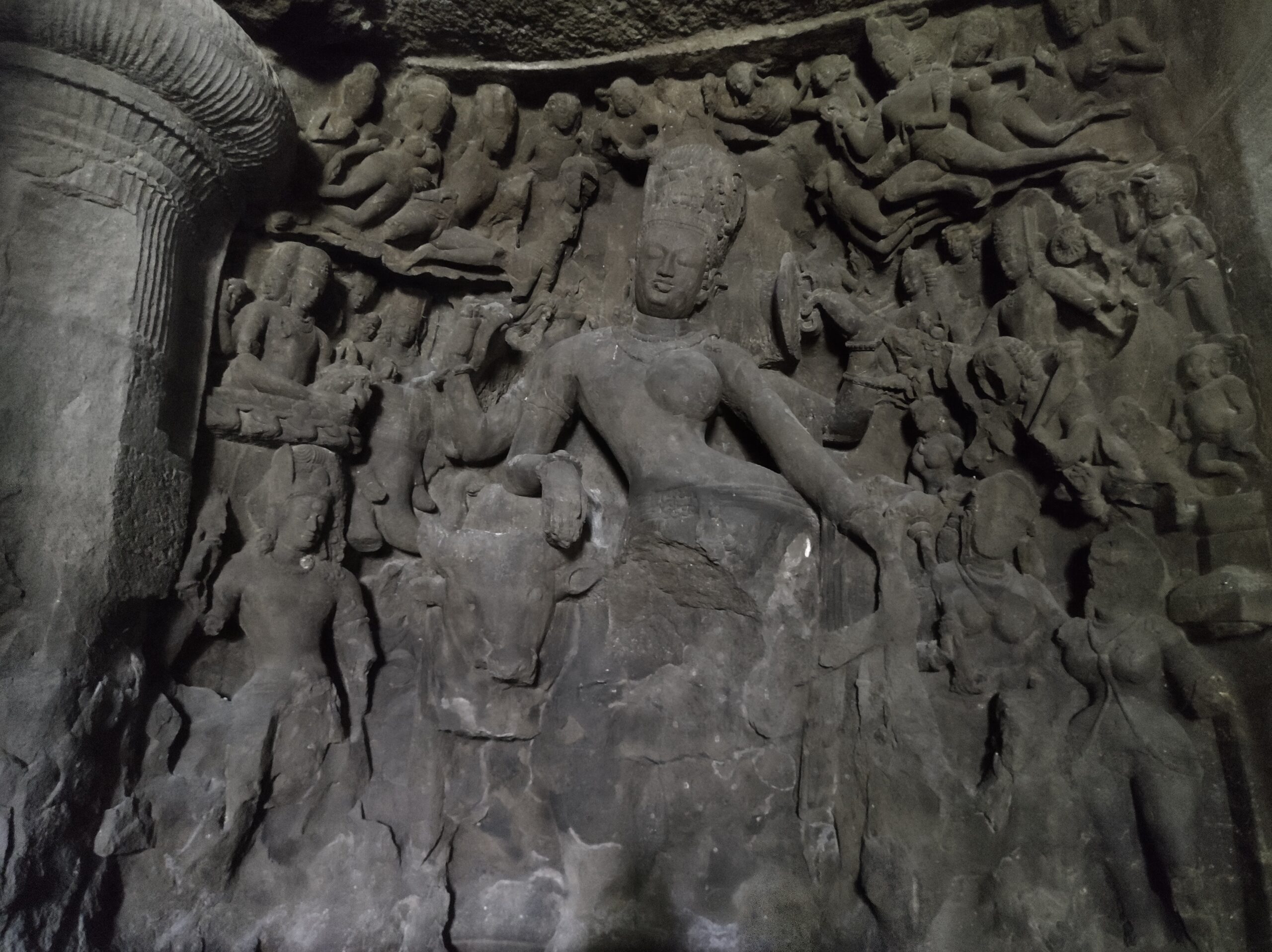
A single figure. Standing tall. Perfectly composed.
The right half is Shiva: ash-covered skin, matted hair wound high, the trident resting in one hand, the crescent moon above the brow. Calm. Still. Absolute.
The left half is Parvati: golden skin glowing warmly, adorned with jewellery, dressed in flowing silk. Alive. Dynamic. Creative.
The dividing line runs straight down the centre of the body. One being, two natures, inseparable.
This is Ardhanarishvara. The name itself tells the story: Ardha, half; Nari, woman; Ishvara, lord. The lord who is half woman.
At the cosmic level, this image carries the most important teaching in all of creation philosophy.
Consciousness, Shiva, without energy, Shakti, cannot create anything. It simply sits. Aware. Infinite. Utterly still. Beautiful, but inert.
Energy, Shakti, without consciousness, Shiva, has no direction, no intelligence, no purpose. It moves endlessly but arrives nowhere.
The universe exists only because these two are inseparably, eternally united. Not one superior to the other. Not one serving the other. Both equally necessary. Both equally divine. The right half and the left half of the same infinite being, neither complete without the other.
At the human level, the teaching lands even closer to home. Every human being, regardless of physical gender, carries both of these energies within. The Shiva within you is the quality of stillness, of witnessing, of pure awareness that watches without reacting. The Shakti within you is the quality of creativity, of movement, of passionate engagement with life. Yoga and meditation, at their deepest level, are the practice of bringing these two inner forces into harmony.
At the social level, consider what this image was saying thousands of years before any modern conversation about gender existed. The divine itself is not exclusively male. The divine itself is not exclusively female. The divine is the perfect union of both. Ardhanarishvara is not a compromise between two opposites. It is the declaration that the opposition itself was never real.
The form is described with reverence in the Shiva Purana, the Linga Purana and the Vamana Purana, and glorified in the Ardhanarishvara Stotram, a hymn attributed to the philosopher Adi Shankaracharya in the 8th century CE.
For the many Americans who practise yoga and have encountered the teaching of balancing Shiva energy, stillness and witness consciousness, with Shakti energy, creative flow and dynamic movement: that teaching comes directly from this ancient icon. Many practitioners meet the Ardhanarishvara principle long before they know its name.
Now they know.
The fierce forms: Virabhadra, Aghori Shiva, Bhairava and Baal Shiv
Shiva is the most tender of fathers, the most devoted of husbands, the most patient of teachers. He is the god who answers the simplest prayer whispered by the most ordinary person with the same attention he gives the greatest sage.
And yet.
There are forms of Shiva that will shake you to your core. Forms that do not comfort. They confront. Not because Shiva is cruel, but because sometimes, what needs to be done in the universe cannot be done gently.
Virabhadra, the warrior born of grief
Of all the stories in the Shiva Purana, the story of Sati is the one that shows most clearly what divine love looks like when it breaks.
Sati was Shiva’s first wife, born the daughter of the great king Daksha. Their love was complete and all-encompassing. But Daksha despised Shiva. He considered the ash-covered, cremation-ground-dwelling ascetic beneath his dignity and his daughter’s worth. When Daksha organised a grand yagna, a sacred fire ceremony, he invited every divine being in existence. Every one, except Shiva.
Sati, unable to bear the insult to her husband, attended anyway. When Daksha publicly humiliated Shiva before the entire assembly of gods, Sati stepped into the sacred fire and was gone.
When Shiva received the news, something in the cosmic order itself trembled.
His grief was not quiet. It was the grief of the infinite, enormous beyond measure. From his matted hair, Shiva tore a single lock and hurled it to the earth with a force that cracked the ground. From that act, Virabhadra was born: a warrior of ten thousand arms, armoured in divine fire, moving with the focused, terrible purpose of grief that has become justice.
Virabhadra dismantled Daksha’s arrogant ceremony completely, because arrogance dressed as religion, pride masquerading as righteousness, needed to be seen for exactly what it was.
This form of Shiva teaches something most spiritual traditions are afraid to say directly: divine love, when it meets genuine injustice, does not remain passive. Even the most compassionate force in the universe has a form that rises when it must.
The three yoga poses known as Virabhadrasana, Warrior I, II and III, are named directly after this form. Every time a yoga student in America moves into Warrior Pose, they are, knowingly or not, embodying the posture of divine grief transformed into purposeful strength.
Aghori Shiva, where no one else will go
The Aghori tradition is perhaps the most widely misunderstood expression of Shiva devotion in the world.
Aghori practitioners worship in cremation grounds. They wear ash. They practise austerities that most people find deeply uncomfortable to even think about, deliberately placing themselves in the spaces society has labelled most impure, most forbidden, most untouchable.
And the teaching behind all of it is devastatingly simple.
If Shiva is everywhere, and the scriptures declare that he is, then he is also here. In this place that you walk past quickly with your eyes down. In this reality that polite society pretends does not exist. The Aghori does not go to the cremation ground in spite of his devotion to Shiva. He goes because of it.
The Aghori form of Shiva is the divine declaring: there is no place my love does not reach. There is no human condition too broken, too dark, too far gone to be beyond my presence.
For someone sitting in genuine darkness, in grief, in addiction, in shame, in the kind of pain that makes them feel beyond the reach of any god, this teaching is the most radical comfort available. You are never too far. There is no such place.
Bhairava, the guardian at the threshold
Bhairava is Shiva’s fierce protector form. The tradition reads his name as the remover of fear, and associates him with time, with accountability, and with the protection of sacred space.
Walk into almost any traditional Shiva temple across India, and you will find a Bhairava statue or image positioned at or near the entrance. He is not there to frighten devotees away. He is the guardian of the threshold, standing between the ordinary world and the sacred space within, ensuring that whatever crosses that threshold does so with proper awareness and genuine intent.
Bhairava holds a staff and a skull cup, and is often accompanied by a dog, the animal most associated in Indian tradition with loyalty beyond social judgment. He sees everything. He protects what is genuinely sacred with a ferocity that cannot be bargained with or bypassed.
Baal Shiv, the child who holds the universe
And then, after all the cosmic grandeur, all the fierce power, all the philosophy, there is Baal Shiv.
The child Shiva. Small. Round-cheeked. Eyes wide and innocent. Perhaps holding a tiny trident that looks almost comically large for such small hands. Perhaps sitting cross-legged in a miniature meditation pose, expression utterly peaceful, utterly present.
Devotees, especially parents, especially children, especially those whose hearts need something approachable and sweet after encountering the more overwhelming aspects of Shiva’s nature, feel an immediate, uncomplicated love for Baal Shiv.
And that is precisely the teaching this form carries. The most infinite power in the universe is also the most innocent. The most ancient consciousness is also the most present, the most fresh. The child and the infinite ascetic are the same being. That is perhaps the most extraordinary thing about Shiva of all.
Shiv Pariwar: The Divine Family of Lord Shiva
Here is something about Shiva that surprises people who only know him as the ash-covered ascetic meditating alone on a mountain.
He is, by every account in the sacred texts, an extraordinary family man.
Not in a conventional sense. But in the deepest possible sense: the sense of a being whose love is so complete, so total, so overflowing that it creates an entire world of relationships around him. He is the husband who waited through lifetimes for his beloved to return. The father who held his child’s severed head in his hands and refused to accept that loss. The master whose devotee has been sitting at his gate for thousands of years, needing nothing else.
The Shiv Pariwar, Shiva’s divine family, is one of the most beloved images in all of Hindu devotional art. When you see that familiar tableau of Shiva and Parvati seated together on Mount Kailash, Ganesha at their side, Kartikeya nearby, Nandi at their feet, something in the human heart responds immediately. Not because it is grand. Because it looks, in the most unexpected and beautiful way, like home.
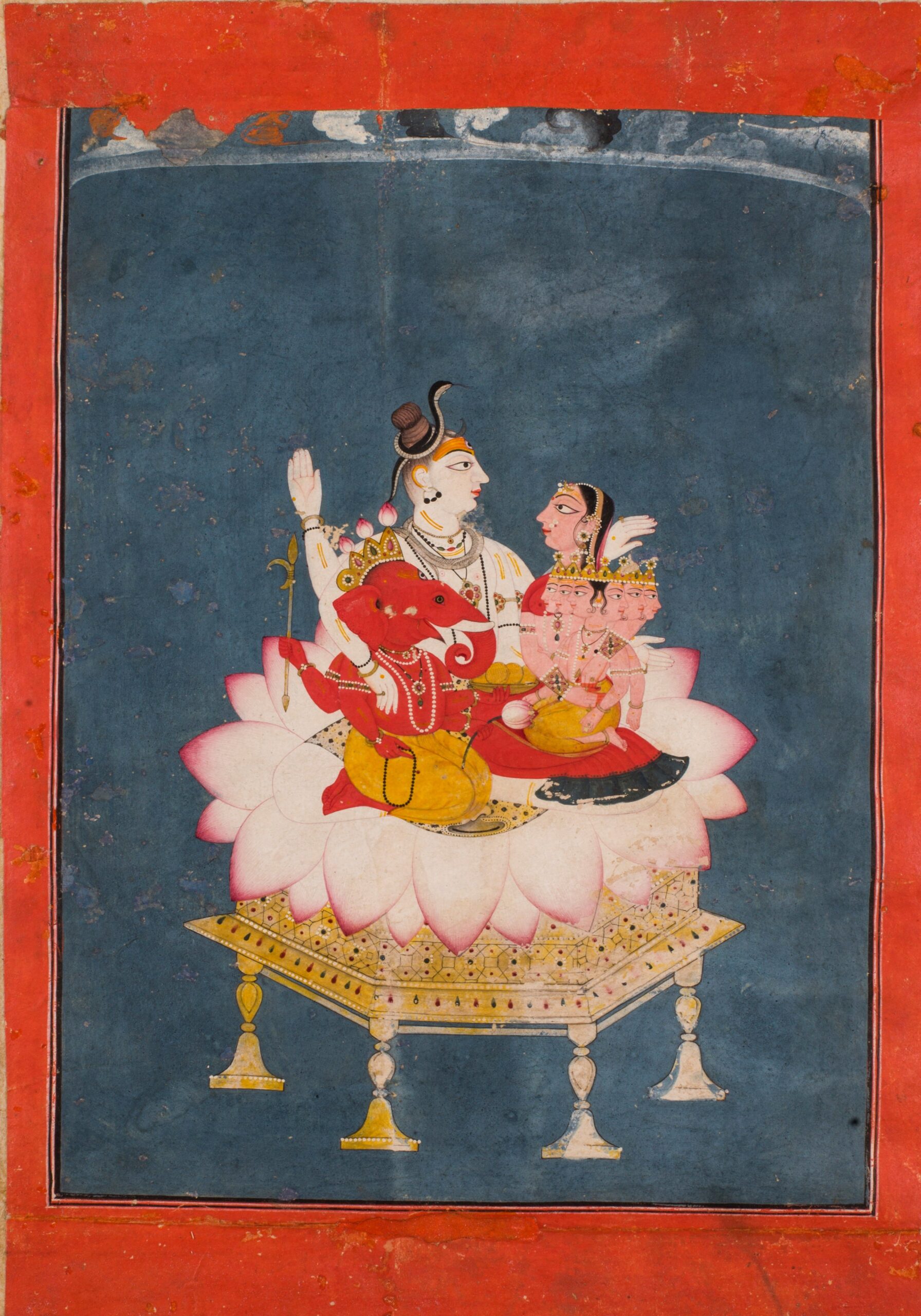
Devi Parvati, the other half of Shiva’s soul
If you want to understand Shiva completely, you must first understand Parvati. Because she is not simply his wife. She is the other half of his being, the Shakti without which even infinite consciousness cannot express itself in the world.
Her story begins in another lifetime.
In that first life, she was Sati, born the daughter of king Daksha, and the first great love of Shiva’s life. When Daksha’s contempt ultimately cost Sati her life, Shiva’s grief shook the cosmos itself. But love of that magnitude does not simply end.
Sati returned. She was reborn as Parvati, daughter of Himavan, the Himalayas personified, and his queen Mena. From her earliest childhood, she knew with absolute certainty who she was and what she had come to do. She went to the forests. She sat in meditation. She practised tapasya, spiritual austerity, of such intensity that the very elements around her responded. Fire raged around her in summer. She stood in water through winter. She was simply, completely, utterly devoted.
All of this to reach Shiva again.
The gods, meanwhile, had a problem only this union could solve. A demon named Tarakasura had obtained a boon that he could be killed only by a son of Shiva, and with Shiva sealed in meditation after Sati’s death, Tarakasura terrorised the universe unchallenged. So the gods sent Kamadeva, the god of love himself, to stir Shiva’s heart. Kamadeva hid in the spring blossoms and loosed his flower arrows at the meditating lord.
Shiva’s meditation broke. And his third eye opened.
Kamadeva was burnt to ash in a single instant. The god of desire himself, destroyed by the one being beyond desire. The gods grieved, and Kamadeva’s wife Rati pleaded for justice, and tradition holds that Shiva restored Kamadeva in a form visible only to Rati’s eyes, so that love would continue in the world, while remaining forever humbled before the ascetic’s stillness. It is one of the strangest, most beautiful stories in the Puranas: desire itself, sacrificed and restored, so that a greater love could be born.
And in the end, it was Parvati’s tapasya, not Kamadeva’s arrows, that won the ascetic. When Shiva finally opened his eyes and looked at the young woman sitting before him in total stillness, he recognised everything. The love story that had been interrupted by time and grief and cosmic turbulence completed itself.
Their marriage is not just a beautiful story. It is a cosmic event. Shiva without Parvati is pure consciousness, infinite, aware, but unexpressed. Parvati without Shiva is energy without direction. Together, they are the complete universe.
She is also far more than a devoted wife. Parvati is the questioner, the student, the one who draws Shiva’s deepest teachings out into the open. The Vigyana Bhairava Tantra, Shiva’s revelation of 112 meditation techniques, begins with Parvati’s question. The Shiva Samhita is framed as a teaching to Parvati. Without her asking, much of what Shiva knows would remain sealed in silence. She is the reason the world has access to this knowledge.
In her fiercer forms, as Durga, as Kali, as the ten Mahavidyas, Parvati shows the full range of the divine feminine: nurturing and fierce, creative and protective.
Lord Ganesha, the beloved son who opens every door
Ask any Hindu, in India or in America, who they pray to first before beginning anything. The answer will almost always be the same: Ganesha. The elephant-headed son of Shiva and Parvati. The remover of obstacles. The lord of new beginnings.
His birth story is one of the most beloved and most human stories in all of sacred literature.
Parvati, one afternoon, wanted to bathe without being disturbed. So she took the sandalwood paste from her own body, shaped it with her hands, and breathed life into it. The boy who came alive from her breath was beautiful, strong, loyal, and entirely devoted to his mother from the first moment of his existence.
He stood guard at the door.
When Shiva returned home and the boy, who had never met his father, refused to let him pass, what followed was, in divine terms, a terrible misunderstanding. Shiva, not knowing this fierce child was his own son, acted the way cosmic forces sometimes act: swiftly, completely, without the full picture. The boy’s head was severed before anyone could stop it.
Parvati’s grief was immediate and absolute.
And Shiva, when he understood what had happened, acted with the same totality he brings to everything. He sent his attendants to bring the head of the first living being they found facing north. They returned with an elephant. Shiva placed that magnificent head upon his son’s body, breathed life back into him, and declared before all of creation that this child would henceforth be worshipped first, before any other deity, before any sacred undertaking, before any new beginning.
Ganesha’s form is a teaching in itself. His large ears mean he listens more than he speaks. His small, sharp eyes mean he sees with precision what others miss. His large belly means he accepts and digests all of life’s experiences, sweet and bitter, with equal equanimity. His broken tusk was sacrificed in service of something greater: it became the pen that wrote the Mahabharata as Vyasa dictated. His vehicle, the mouse, represents the restless, nibbling mind, and Ganesha rides it, having mastered the very thing that controls most human beings.
Lord Kartikeya, the commander born of cosmic fire
Kartikeya, also known as Skanda, as Murugan in Tamil tradition, and as Subrahmanya, is the second son of Shiva and Parvati, and his very birth was the answer to Tarakasura’s terror.
Born of the combined energies of Shiva and Parvati, nurtured by the Krittikas, the Pleiades star cluster from whom he takes his name, Kartikeya grew into the supreme commander of the divine army, a warrior of matchless skill and spiritual depth. His vehicle is the peacock, the one creature in Indian tradition that can consume serpents without harm, and he carries the Vel, the divine spear given to him by Parvati, representing the piercing power of spiritual knowledge that destroys ignorance wherever it finds it.
The great festival of Karthigai Deepam, celebrated across Tamil Nadu each November and December with millions of lamps, belongs to this family: it honours Kartikeya, whose star the month bears, and it celebrates Shiva himself as the infinite column of light, the story we will meet again before this guide ends.
In the Tamil-speaking Hindu diaspora communities across the United States, in Fremont, in New Jersey, in Houston, Murugan temples are centres of joyful, living devotion that keep this tradition alive across generations and oceans.
Nandi, the one who only needs to look at him
Walk into any Shiva temple in the world, and before you reach the main shrine, you will encounter Nandi.
A magnificent bull, seated with perfect stillness, his gaze fixed in one direction only: forward, toward the Shivalinga. Always. Without wavering. Without needing anything else.
Nandi is Shiva’s vahana, his sacred vehicle, and the gatekeeper of Kailash. But he is far more than either of those titles suggests. Nandi is the supreme expression of what the tradition calls nishkama bhakti, devotion that desires nothing in return. He does not worship Shiva to receive blessings, or to earn liberation, or to fulfil any personal aspiration. He worships because looking at Shiva is, for Nandi, the most complete experience of existence he can imagine.
This is why devotees in Shiva temples traditionally kneel behind Nandi and look through the space between his horns toward the Shivalinga: to look at Shiva through the eyes of Nandi’s devotion is considered one of the most auspicious acts of worship available to a human being.
Nandi is also, in his own right, a great sage. He is credited with transmitting the Shaiva Agama texts, the foundational scriptures of temple tradition, from Shiva to humanity. The knowledge of how to build temples, how to consecrate sacred spaces, how to conduct the rituals that keep divine energy alive in the physical world, all of this flows through Nandi.
He is patience personified. He is loyalty made visible. He is the answer to the question: what does perfect devotion look like?
It looks like a bull, seated, looking quietly at the one he loves, needing absolutely nothing else.
Hanuman, the connection many devotees do not know
Here is something that surprises many people, even devoted Hindus who have worshipped both Shiva and Hanuman their entire lives.
Many traditions hold that Hanuman is a direct manifestation of Shiva’s own energy. The reading appears in Puranic sources including the Shiva Purana and the Skanda Purana, which describe Hanuman as a Rudra avatar, Shiva’s power born into the world as a monkey-devotee specifically to serve Lord Rama in the Treta Yuga. Not every tradition reads it this way, and devotees of the Vaishnava schools honour Hanuman as Rama’s supreme servant in his own right. But the Shaiva reading is ancient and widely loved.
Look at Hanuman’s attributes through this lens. His strength to lift entire mountains is the strength of Rudra. His absolute celibacy, brahmacharya, is the hallmark of Shiva the ascetic. His fearlessness before fire, armies and the ocean itself is the fearlessness of the one who wears a serpent at his throat. And his total, selfless devotion to Rama, asking nothing, needing nothing, simply serving, is nishkama bhakti in its most perfect heroic expression.
When a Shiva devotee also worships Hanuman, which is enormously common across Hindu households in America and around the world, they are, in this reading, honouring the same divine source expressing itself in two forms, for two purposes, in two ages of the world.
The complete Shiv Pariwar at a glance
| Family member | Relationship to Shiva | Vehicle or symbol | The teaching they carry |
| Parvati, Shakti | Wife, his divine energy | Lion | Love, devotion, the sacred feminine, consciousness expressing itself |
| Ganesha | Elder son, the obstacle remover | Mouse | Wisdom, new beginnings, deep listening, accepting life fully |
| Kartikeya, Murugan | Younger son, commander of the divine army | Peacock | Valour, spiritual knowledge, clarity that pierces ignorance |
| Nandi | Supreme devotee and vehicle, gatekeeper of Kailash | Bull | Devotion without desire, patience without condition |
| Hanuman | Rudra avatar in service of Rama | none | Selfless strength, fearless service, liberation through love |
Sacred Abodes: From Mount Kailash to the 12 Jyotirlingas
There are places on this earth where the ordinary rules of space and time seem to thin out, where something ancient and immense feels closer than usual, where the air itself carries a quality that is difficult to name but impossible to ignore.
For hundreds of millions of Shiva devotees across the world, these places are not accidents of geography. They are the footprints of the divine, locations where Shiva’s presence is not merely believed in, but genuinely felt, by pilgrim after pilgrim across thousands of years of continuous, unbroken worship.
Let us travel together through the most sacred of these abodes, from the unclimbed peak that touches the sky to the ancient city where even death becomes a doorway.
Mount Kailash: where heaven touches earth
At 6,638 metres (21,778 feet) above sea level, in the remote Tibetan plateau, stands a mountain that is unlike any other on earth.
Not because it is the tallest. It is not. Not because it is the most technically challenging to approach, though it is extraordinarily remote. Mount Kailash is unlike any other mountain because of what it is. What it has always been. What every tradition that has ever encountered it has independently recognised it to be.
The home of Shiva.
According to Hindu tradition, Mount Kailash is the earthly residence of Lord Shiva and Parvati, the place where Shiva sits in eternal meditation, holding the universe in the stillness of his awareness. The mountain itself, with its distinctive pyramidal form and four sheer faces oriented to the four cardinal directions, has a symmetry that devotees read as intention rather than geological accident. Our complete guide to the mountain’s sacred geography walks through each face and what the tradition reads in it.
From those four faces, four of Asia’s great rivers originate and flow outward to the four directions:
| River | Direction of flow | Civilisations it sustains |
| Indus | Northwest | Pakistan, northwestern India |
| Sutlej | West-southwest | Northern India, Pakistan |
| Brahmaputra | East | Tibet, northeast India, Bangladesh |
| Karnali | South | Nepal, northern India |
Four rivers. Billions of lives sustained. All flowing from the region of the mountain where Shiva dwells. These rivers are real, their sources are documented, and the civilisations they have nourished for millennia are historical fact.
Near the mountain lie two lakes that belong to the same sacred story: Lake Mansarovar, the round lake of clear water that tradition holds was formed in the mind of Brahma before it took shape on earth, and Rakshas Tal, the darker lake associated with the demon king Ravana’s tapasya. One is said to hold the light, the other the shadow, and pilgrims hold Mansarovar in special reverence: to bathe in its waters, where conditions permit, and to offer prayer beside it, is part of almost every yatra.
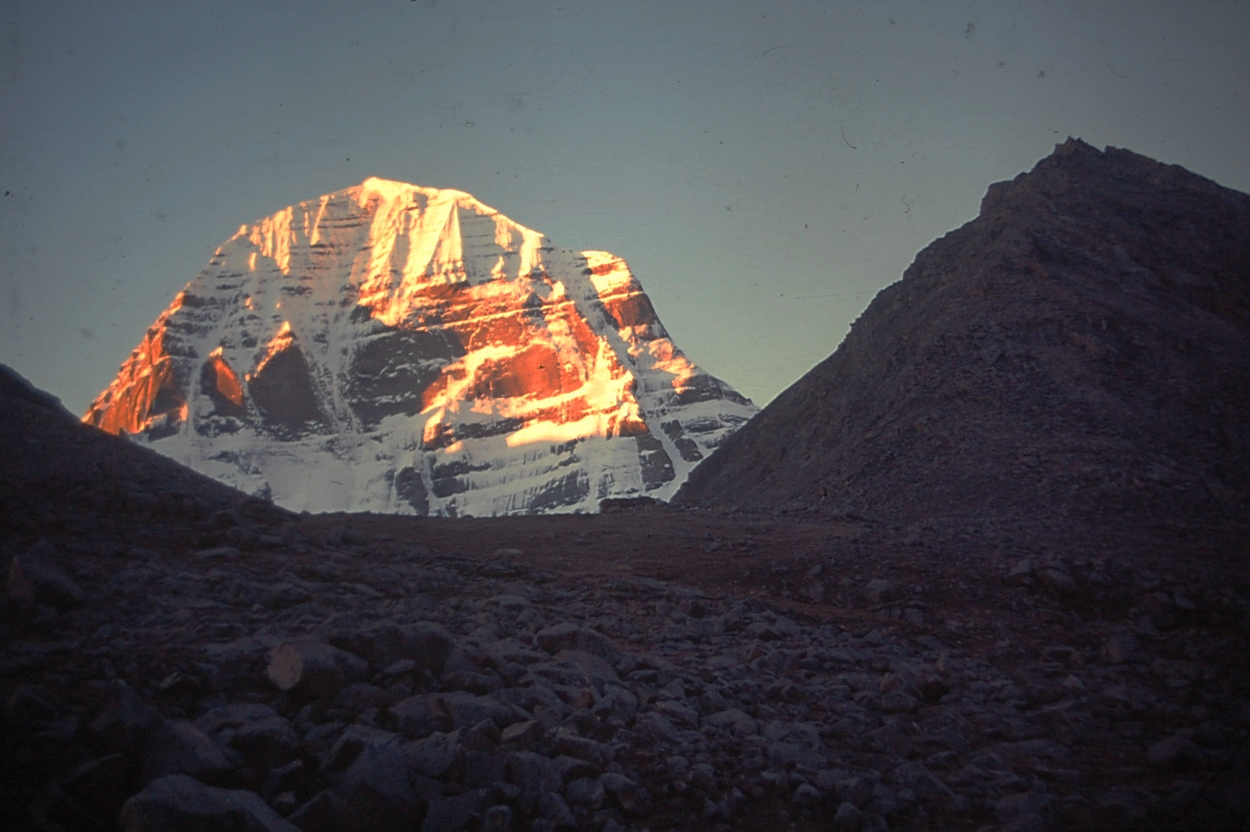
What makes Kailash even more extraordinary is that it is sacred not to Hindus alone. Tibetan Buddhists honour it as the palace of Chakrasamvara, the lord of supreme bliss. Jains revere it as the place where their first Tirthankara, Rishabhadeva, attained liberation. Followers of Bon, Tibet’s ancient pre-Buddhist tradition, regard it as the seat of all spiritual power. Four independent traditions, arriving at the same mountain, recognising the same quality of sacredness, through entirely different paths. Our guide to why Kailash is sacred to four faiths tells that story in full.
No one has ever climbed Mount Kailash. This is not because it is technically impossible. It is because the mountain is honoured as too sacred to stand upon: permissions have never been granted, and pilgrims of every tradition have always agreed. You circumambulate Kailash, you walk around it in reverence, you do not climb it.
The kora, the circumambulation of the mountain, covers approximately 52 kilometres on foot over three days, at altitudes that test every limit of the human body, crossing the Dolma La pass at 5,630 metres. Those who complete it describe something that goes beyond the physical: a stripping away of everything unnecessary, a clarity that does not leave them when they return home. Our complete kora guide covers the route, the difficulty and what to expect, honestly.
For devotees in the United States who cannot make this journey in person, simply facing toward Kailash during morning prayer, acknowledging that Shiva sits there, aware, present, accessible, is itself an act of connection that transcends physical distance. And for those whose hearts ask to go, the journey runs through our house: we have been guiding pilgrims to this mountain since 2006, and it remains the deepest work we do.
The 12 Jyotirlingas: pillars of infinite light
When the ego of both Brahma and Vishnu dissolved in the presence of Shiva’s infinite column of light, the Jyotirlinga, twelve locations across India became permanently marked as the places where that light touches the earth most intensely.
The word Jyotirlinga breaks into Jyoti, light, and Linga, form: a pillar of divine light made accessible in physical form. According to the Shiva Purana, these are locations where Shiva himself appeared, spontaneously, in response to the devotion and need of the world. Visiting all twelve is considered among the most meritorious acts of pilgrimage in the Shaiva tradition. Even knowing their names with devotion is said to carry blessing.
| # | Jyotirlinga | Sacred location | State | Special significance |
| 1 | Somnath | Prabhas Patan | Gujarat | The first and most ancient, repeatedly destroyed and rebuilt, a symbol of resilience |
| 2 | Mallikarjuna | Srisailam | Andhra Pradesh | In the Nallamala forest hills, associated with Shiva and Parvati together |
| 3 | Mahakaleshwar | Ujjain | Madhya Pradesh | The only south-facing Jyotirlinga, associated with mastery over time and death |
| 4 | Omkareshwar | Mandhata Island | Madhya Pradesh | On an island shaped like the syllable Om in the Narmada River |
| 5 | Kedarnath | Kedarnath Valley | Uttarakhand | The highest Jyotirlinga at 3,583 metres, open May to November, ringed by Himalayan peaks |
| 6 | Bhimashankar | Sahyadri ranges | Maharashtra | The source of the Bhima River |
| 7 | Kashi Vishwanath | Varanasi | Uttar Pradesh | The most spiritually significant, in the city where even death brings liberation |
| 8 | Trimbakeshwar | Trimbak | Maharashtra | Near the source of the Godavari, with a three-faced Linga of Brahma, Vishnu and Shiva |
| 9 | Vaidyanath | Deoghar | Jharkhand | The divine physician, associated with healing and the removal of suffering |
| 10 | Nageshvara | Dwarka | Gujarat | The lord of serpents, connected to Shiva’s Nagabhushana aspect |
| 11 | Rameshwaram | Rameswaram | Tamil Nadu | Consecrated by Rama before his journey to Lanka, where north and south meet |
| 12 | Grishneshwar | Ellora | Maharashtra | Beside the magnificent Ellora Caves, a UNESCO World Heritage Site |
A pilgrim’s note for USA devotees: while the physical journey to all twelve requires travel to India, many Shiva temples across the United States conduct special Jyotirlinga archana, a ritual invocation of all twelve sacred forms, particularly on Mondays and during Maha Shivaratri. Participating in this archana, thousands of miles from India, is a genuine connection to each of these sites.
Pancha Bhoota Stalam: where Shiva becomes the five elements
This is one of the least-known dimensions of Shiva’s sacred geography, and it is almost entirely absent from other guides.
The Pancha Bhoota Stalam, the five element sacred sites, are five ancient Shiva temples in South India, each consecrated to Shiva’s presence in one of the five fundamental elements that make up all of physical existence. Together, they represent the complete material universe as a living expression of Shiva’s being.
| Temple | Shiva’s form | Element | Location | What this teaches |
| Ekambareswarar | Prithveeswara | Earth | Kanchipuram, Tamil Nadu | Shiva as the ground beneath all existence, solid, patient, sustaining |
| Jambukeswarar | Appu Lingam | Water | Thiruvanaikaval, Tamil Nadu | Shiva as the flow of life; the Linga sits in a natural spring |
| Arunachaleswarar | Annamalaiyar | Fire | Tiruvannamalai, Tamil Nadu | Shiva as the light of consciousness; the hill itself is honoured as Shiva |
| Kalahasti | Vayu Lingam | Air | Srikalahasti, Andhra Pradesh | Shiva as the breath of life; the Linga is said to respond to subtle air currents |
| Chidambaram | Akasha Lingam | Space | Chidambaram, Tamil Nadu | The most mysterious: the divine presence is empty space itself, behind a curtain |
The Chidambaram temple deserves a special moment. In the innermost sanctum, where the Akasha Lingam, the space linga, is enshrined, there is a curtain of golden vilva leaves. When the curtain is drawn aside during special darshan, devotees look into nothing. Empty space. And that empty space is what is worshipped there. That nothingness is Shiva. It is the most honest and most radical statement any temple has ever made about the nature of the divine.
Ramana Maharshi, the great 20th-century sage who lived at the foot of Arunachala, taught that the hill is not merely associated with Shiva. It is Shiva, the mountain and the Lord one reality in two forms. Thousands of seekers from across the world, including many Americans, have walked the Girivalam path around that hill and returned describing the same experience: a wordless recognition, something coming home.
Kashi: the city where even death becomes liberation
Of all the sacred places in Shiva’s geography, one stands entirely apart.
Varanasi. Also called Kashi. Also called Benares. One of the oldest continuously inhabited cities on earth, a city that has been alive and worshipping without interruption for at least 3,000 years, and by some scholarly estimates considerably longer.
Kashi is not simply a city where Shiva is worshipped. Kashi is Shiva’s city, held, according to the Puranas, in the palm of his trident above the floods of cosmic dissolution. When mahapralaya comes and the universe dissolves, Kashi remains, protected, because Shiva himself holds it.
The Kashi Vishwanath Jyotirlinga at the heart of the city is one of the most visited pilgrimage sites on earth. But what makes Kashi truly extraordinary is a teaching found in the Kashi Khanda of the Skanda Purana: those who die within the sacred boundaries of Kashi receive, at the moment of death, the Taraka Mantra whispered in their ear by Shiva himself. The Taraka Mantra is the mantra of liberation.
This is why, for thousands of years, people from across India have come to Kashi to die. Not in despair. In hope. In the most extraordinary kind of hope, the hope of final liberation offered by Shiva’s own grace to anyone who arrives at his city’s threshold at the end of their journey.
The great burning ghats of Varanasi, where cremations happen openly and continuously, are not morbid spectacles to the Shiva devotee. They are where the transformation of samhara happens most visibly and most mercifully, with Shiva himself, according to the tradition, present at every fire.
Shiva in Nepal: Pashupatinath and the door to Kailash
Before this guide turns toward practice, one more abode deserves its moment, and it is the one this house knows most intimately.
Kathmandu, the capital of Nepal, holds one of the most significant Shiva temples anywhere in the world: Pashupatinath, on the banks of the Bagmati river. The name means Lord of All Beings, Pashupati, the same ancient epithet the tradition has used since Vedic times. The temple is a UNESCO World Heritage Site, and for centuries it has been the beating heart of Shiva worship in the Himalayan nation.
We know this temple the way a family knows a room. Every Kailash journey we run begins in Kathmandu, and the sacred city day of the itinerary brings our pilgrims to Pashupatinath: the evening aarati on the banks of the Bagmati, the lamps, the bells, the prayers rising with the smoke, the Sadhus seated in the courtyards where they have sat for as long as anyone remembers. For many pilgrims, it is the moment the yatra truly begins, darshan of Pashupatinath before the road turns toward Tibet. Our Kathmandu guide covers what the arrival days hold and how to prepare for them.
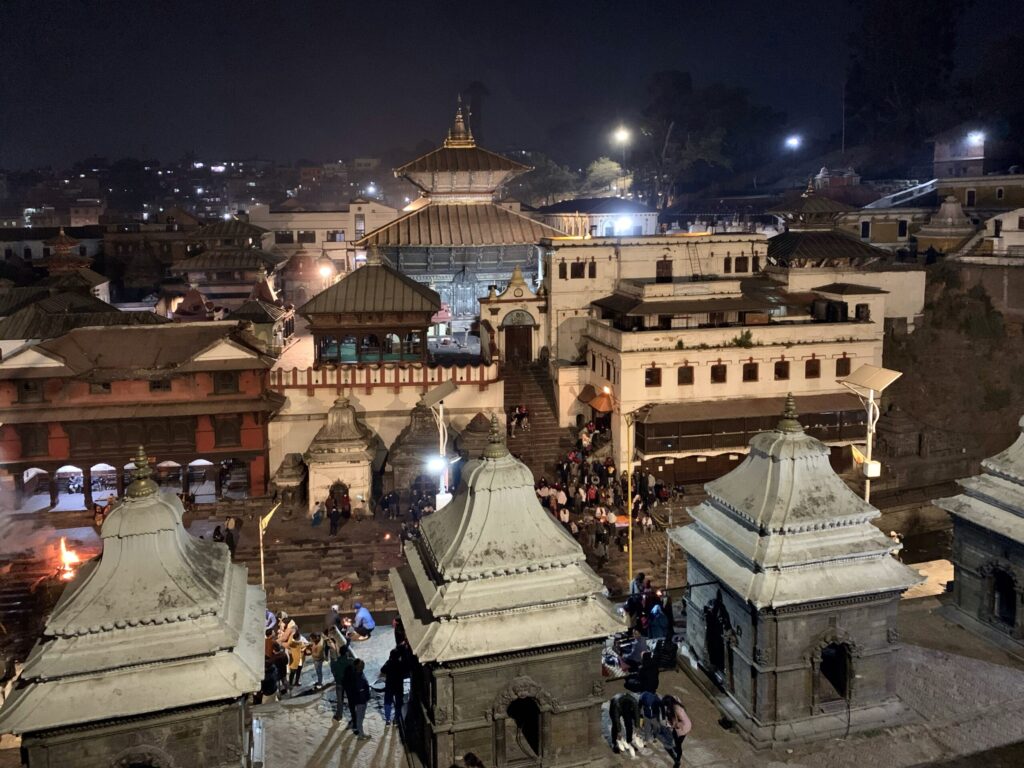
In Nepal, Shiva is not a distant figure of scripture. He is household presence. People greet the morning with Mahadev on their lips. Bholenath, the innocent lord, is spoken to like a family elder who happens to be infinite. The world’s tallest Shiva statue of its kind in Nepal, the white Kailashnath Mahadev at Sanga, 143 feet of marble looking out over the hills, tells you how present he is here.
And once each year, on Maha Shivaratri, Pashupatinath becomes something that has to be seen to be believed. Sadhus from across the subcontinent make their way to the temple, ash-smeared, trident-carrying, some who have walked for weeks. Thousands of devotees keep vigil through the night, and the temple grounds fill with firelight, chant and incense from dusk until dawn. Shivaratri at Pashupatinath is among the great Shiva nights on earth.
There is one more reason Nepal belongs in any honest map of Shiva’s abodes. For centuries, the pilgrim road to Mount Kailash has run through Nepal. The valley of Kathmandu has been the gathering point, the last soft bed and warm meal before the high plateau, the place where families bid their elders farewell for the mountain. It still is. When our pilgrims leave for Kailash, they leave through the country where Pashupatinath watches over the valley, and when they return, they return to him.
How to Worship Lord Shiva: Mantras, Rituals and Daily Devotion
We have travelled far together in this guide. From the unclimbed peak of Kailash to the burning ghats of Kashi, from the cosmic dance of Nataraja to the quiet waiting of Nandi at the temple gate. We have seen where Shiva dwells in the world.
Now let us bring it home.
Because the most sacred pilgrimage of all is not to a mountain in Tibet or a temple in Varanasi. It is the journey from the surface of your mind to the stillness at its centre. And that journey begins exactly where you are: in your bedroom, your kitchen corner, your morning routine, your breath.
Om Namah Shivaya: the mantra that contains everything
There is a reason that, of all the thousands of mantras in the Vedic tradition, Om Namah Shivaya is the one that has travelled furthest. It is chanted in Himalayan ashrams and New York apartments. It plays in yoga studios in Los Angeles and temple halls in Chennai. It has been on the lips of saints and ordinary people for thousands of years, and it loses none of its power with repetition.
If you learn one thing from this entire guide, make it this mantra.
What it means
In Sanskrit:
oṁ namaḥ śivāya
The mantra is called the Panchakshari, the five-syllabled one: Na, Ma, Shi, Va, Ya. They are not random sounds. Each syllable is a direct invocation of one of the five fundamental elements that compose everything in the physical universe:
| Syllable | Element | Body and being connection |
| Na | Earth | Groundedness, stability, physical presence |
| Ma | Water | The emotional body, fluidity, the capacity to feel |
| Shi | Fire | Inner transformation, the force that turns experience into wisdom |
| Va | Air | Movement, the breath itself, the life force |
| Ya | Space | Pure awareness, the consciousness that witnesses everything |
Om is not technically part of the Panchakshari. The five syllables stand complete on their own. Om is added as the primordial sound, the vibration that precedes all other sound. Adding Om at the beginning is like lighting the lamp before you open the door.
The complete mantra, Om Namah Shivaya, translates most beautifully as: I bow to that which I truly am. Not I bow to an external god. The self bowing to the Self. The small wave recognising that it is the ocean.
This is the most intimate mantra in existence. It is not a prayer to someone far away. It is a recognition of what is already here.
How to chant: a beginner’s complete guide
Where to sit: find a clean, quiet space. A corner of your bedroom works. A spot in your garden. A chair in your living room before the rest of the house wakes up. The quality of your attention matters more than the elegance of your setting.
When to chant: the traditional ideal is Brahma Muhurta, approximately one and a half hours before sunrise. In most US cities this falls between 4:00 and 5:30 AM depending on the season. But if that is not possible for you, any quiet morning time works. Shiva does not keep office hours.
How to sit: comfortably. That is the only requirement. You do not need lotus position. Sit so that your spine is reasonably upright and your body is at ease.
How many times: use a Rudraksha mala, a string of 108 beads, to count if you wish. One full round of 108 repetitions is a complete traditional practice. If 108 feels like too much, start with 27. Or simply chant for five minutes by the clock.
How to chant: at a comfortable, unhurried pace. Not racing to the end. Find the pace at which the words feel like they are arising from inside rather than being placed on top of your breath from outside.
The most important instruction: do not perform the mantra. Allow it. Let the sound move through you the way water moves through a clean channel. Something is always happening. Trust the sound.
The Maha Mrityunjaya Mantra: the great healing chant
If Om Namah Shivaya is the mantra of recognition, the Maha Mrityunjaya Mantra is the mantra of release from fear. Specifically, the deepest human fear: the fear of death.
The mantra comes from the Rigveda (7.59.12), making it one of the oldest continuously chanted prayers in human history:
oṁ tryambakaṁ yajāmahe
sugandhiṁ puṣṭi-vardhanam
urvārukam iva bandhanān
mṛtyor mukṣīya māmṛtāt
“We worship the three-eyed one, Lord Shiva, who is fragrant with grace and who nourishes all beings. As a ripe cucumber is freed from its vine, may he liberate us from the bondage of death, and grant us immortality.”
The cucumber image is worth sitting with. When a cucumber is fully ripe, it releases from the vine on its own, naturally, without tearing. The mantra asks for that kind of liberation: not a violent ripping away from life, but a natural, complete, timely release.
Tradition connects this mantra to the story of the boy Markandeya, and the story deserves its moment here. Markandeya was destined to die at sixteen. When Yama, the lord of death, came to claim him, the boy was holding tight to the Shivalinga, chanting this mantra with his whole heart. Yama cast his noose, and it fell around the linga itself. Shiva emerged, and his wrath at the one who would take a devotee mid-prayer became Kalantaka, the end of Yama’s claim. The boy was granted long life, and the tradition has chanted this mantra for protection and healing ever since. It is the mantra people reach for when someone they love is ill.
This mantra is chanted for healing, for courage in times of fear, for those who are dying, and as the primary mantra of the Rudrabhishek ceremony.
Other sacred mantras and prayers
| Mantra or prayer | Language | Purpose and when to use |
| Shiva Gayatri | Sanskrit | Om Tatpurushaya Vidmahe, Mahadevaya Dhimahi, Tanno Rudrah Prachodayat: for clarity and illumination |
| Sri Rudram, Namakam and Chamakam | Vedic Sanskrit | The most complete Vedic hymn to Shiva, chanted during full Rudrabhishek ceremonies |
| Shiva Suprabhatam | Sanskrit and Telugu | A devotional morning prayer that wakes Shiva with love, beloved in South Indian households |
| Siva Kavasam | Tamil | A protective hymn invoking Shiva’s armour over the body and life, beloved in Tamil communities |
Rudrabhishek and Shivalinga worship at home: the practical guide
Before we talk about how to perform Shiva puja at home, we need to address something that stops many sincere seekers before they even begin.
The feeling that they are not qualified. That they do not know Sanskrit. That their home is not clean enough, their knowledge not deep enough.
Here is what the Shiva Purana says about who is qualified to worship Shiva: anyone with a sincere heart. That is the only qualification. Shiva, the one who stands in cremation grounds, who accepts the outcast and the ascetic equally, who drinks poison to protect creation, is not waiting for your credentials. He is waiting for your genuine feeling. Come as you are.
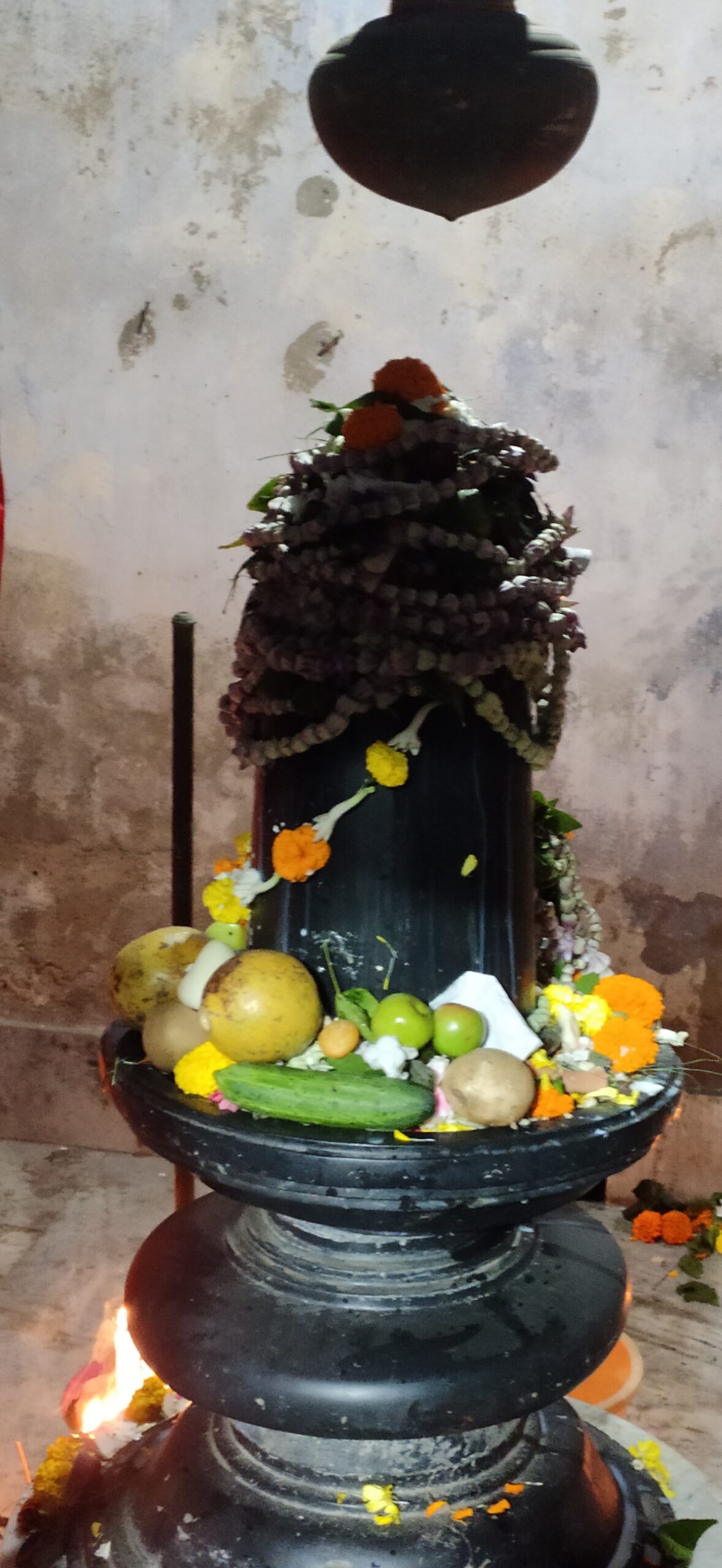
What exactly is a Shivalinga?
The word Linga in Sanskrit means symbol, mark, form. The Shivalinga is the cosmic form of the formless: the most honest attempt the physical world can make to represent what has no form at all.
The cylindrical upper form represents Shiva, pure consciousness, the awareness that witnesses all existence. The circular base, the yoni pitha, represents Shakti, the dynamic creative energy, the womb of manifestation. Together they represent the totality of existence: consciousness resting in creative energy, the infinite expressed through the finite, the Ardhanarishvara principle in its most abstract form.
| Type of Shivalinga | Where it comes from | Best for |
| Svayambhu Linga | Self-manifested in nature, no human hand | The highest sacred status, found at Jyotirlinga sites |
| Bana Linga, Narmada stone | Naturally formed in the Narmada River | Ideal for home worship, considered self-consecrated |
| Sphatika, crystal | Natural quartz | Clarity, meditation focus |
| Black granite | Hand-carved stone | The common temple form |
| Parad, mercury | Solidified mercury, ancient process | Rare, revered in tantric traditions |
For devotees in the United States, the Bana Linga, the natural Narmada river stone, is the most recommended choice for home worship. These smooth, naturally oval stones are formed over thousands of years by the current of the sacred Narmada River. They are considered self-consecrated, meaning they do not require a formal prana pratishtha, an installation ceremony, before worship begins. You can bring one home and begin your puja immediately with a sincere heart.
What you will need
A Shivalinga, Bana Linga, crystal, or any clean stone form. Clean water, filtered or bottled is fine. Milk, cow’s milk is traditional, plant-based milk accepted with sincere intent. Panchamrit ingredients: milk, honey, yogurt, ghee and sugar. Bilva leaves, bel patra, the single most important offering. White flowers, jasmine or chrysanthemum or any white flower. Raw rice, unbroken grains. A clay lamp with ghee or sesame oil. Incense. A Rudraksha mala if you have one.
Do not feel pressured to have everything perfectly. Start with water and what you have. Shiva himself is called Bholenath, the easily pleased.
The steps
- Step 1, cleanse yourself. Bathe before your puja and wear clean clothing. This outer gesture carries an inner intention: you are arriving fresh.
- Step 2, set your sankalpa, your intention. Sit quietly for one full minute before touching anything. In your own words, English is perfectly fine, state who you are, what you are about to do, and why. It can be as simple as: I am here. I offer this to you. With love. Shiva hears intention more clearly than Sanskrit.
- Step 3, jal abhishekam. Slowly pour clean water over the Shivalinga in a gentle stream while chanting Om Namah Shivaya, aloud if possible, internally if your space requires quiet.
- Step 4, panchamrit. Offer the five liquids one at a time, each poured slowly: first milk, then yogurt, then honey, then ghee, then sugar water. Between each offering, keep the chant going. There is no rush. This is not a procedure to complete. It is a conversation to have.
- Step 5, Bilva leaves. This is the heart of Shiva worship. Take three Bilva leaves on one stem, the trifoliate leaf, and place them gently on the linga. The three leaves represent the three eyes of Shiva, the three gunas, the three states of consciousness. The Shiva Purana states that offering a single trifoliate Bilva leaf with genuine devotion carries the merit of offering the entire universe. If you cannot find fresh Bilva, dried is fully acceptable.
- Step 6, flowers and rice. Place white flowers and unbroken rice gently around the base, each flower offered silently for something: a gratitude, a concern, a hope.
- Step 7, light the lamp. Place it near the linga and watch the flame for a moment. This small fire is the light of consciousness in your home.
- Step 8, chant and pray. Om Namah Shivaya, eleven times minimum, 108 if time permits. Or the Maha Mrityunjaya. Or simply speak, in your own words, in whatever language lives most naturally in your heart. He is closer than your own breath.
- Step 9, sit in stillness. After everything, stop. Five minutes. No more words. This stillness at the end is not the conclusion of the worship. It is the deepest part of it.
A practical note for USA devotees
Bilva leaves are available at most Indian grocery stores in metropolitan areas, ask for bel patra, and widely available dried online. Bana Lingas are available through reputable vendors, search for Narmada Shiva stone. And many Shiva temples across the United States, from Houston to Livermore to New York, offer formal Rudrabhishek ceremonies on Mondays and festival days. Attending even once is an experience no amount of reading replicates.
And when your heart turns from the linga at home toward the great abodes themselves, toward Pashupatinath and Mansarovar and the mountain that has never been climbed, that is the journey our house exists to guide, and we will be glad to walk it with you.
The Spiritual Texts and Sacred Knowledge of Shiva
Here is something worth pausing on for a moment.
The next time you are in a yoga class in your city, watching the instructor guide the room through breathing exercises, or leading a body-scan meditation, or speaking about the quality of witnessing your thoughts without being caught in them, know this: every one of those practices has a source, and that source, in almost every case, traces back to Shiva.
The knowledge attributed to Lord Shiva is not just ancient religious content preserved in temple traditions. It is the oldest systematic science of human consciousness ever recorded: a complete, sophisticated map of the inner world.
These texts are alive. They are not museum pieces. They are working tools, and for the serious devotee or seeker, they are among the most valuable things a human being can encounter in a lifetime.
The Shiva Sutras: when the divine left a note on a rock
Around the 9th century CE, a sage named Vasugupta was living in the mountains of Kashmir. Tradition says Shiva appeared to him in a dream and told him to go to a specific rock on Mahadeva mountain. When Vasugupta went, he found the rock, and when it turned, inscribed on its surface were 77 aphorisms.
These are the Shiva Sutras.
They are the foundational scripture of Kashmir Shaivism, one of the most intellectually rigorous non-dualistic philosophical systems ever developed. Kashmir Shaivism does not say the individual soul must eventually reach God. It says something far more startling: the individual soul already is the divine. The separation is not real. It is a magnificent, temporary forgetting.
The very first sutra says everything:
“caitanyam ātmā.” Consciousness is the Self.
Not consciousness is an attribute of the Self. Not consciousness is given to the Self by God. Consciousness is the Self. Your deepest nature, beneath every thought, every emotion, every identity you carry, is pure, boundless awareness. That awareness is Shiva. And it has never been absent from you for a single moment.
For readers drawn to consciousness studies or the philosophical underpinnings of yoga, the Shiva Sutras are essential reading, with several accessible English translations in print.
The Vigyana Bhairava Tantra: 112 doorways into the infinite
Imagine sitting with your beloved and asking the most important question you have ever asked anyone: what is your true nature? What are you, really?
That is what Parvati asked Shiva. And Shiva’s answer, recorded in the Vigyana Bhairava Tantra, is 112 meditation techniques. Not a philosophical explanation. One hundred and twelve direct, practical doorways into the experience of ultimate reality.
Some are strikingly simple. Notice the space between two thoughts. Taste something fully, completely. Look at a vast open sky and stay with the vastness. Feel the exact moment between waking and sleeping. Contemplate the space inside an empty room.
Some are more subtle. Some require years. But every one of the 112 points at the same thing from a different angle: the recognition of the infinite consciousness already present within you.
Osho brought this text to the Western world through his monumental series The Book of Secrets, and many Americans first encountered these techniques through his commentaries, often without knowing the original text’s name.
What most people who practise meditation today do not realise is this: the technique in your mindfulness app, the body awareness practice from your yoga training, the open awareness meditation from your retreat, almost certainly traces back to this one ancient dialogue between Shiva and Parvati. It is the root text of the world’s meditation heritage, rarely credited.
The Shiva Samhita: the complete science of the yogic body
If the Shiva Sutras are the philosophy and the Vigyana Bhairava Tantra is the meditation practice, the Shiva Samhita is the technical manual: the systematic science of the human energy body.
Attributed directly to Shiva and framed as his teaching to Parvati, it covers the nature of the physical body and its energetic counterpart, the system of nadis, the energy channels threading through the body, with Ida, Pingala and Sushumna as the three great highways. It covers the science of kundalini, the coiled energy at the base of the spine, and pranayama, the regulation of breath as a tool of transformation.
The Shiva Samhita stands alongside the Hatha Yoga Pradipika and the Gheranda Samhita as one of the three foundational classical texts of Hatha Yoga. Every yoga teacher training in the United States that covers the energy body, chakras or pranayama draws from the tradition this text represents.
The Shiva Swarodaya: reading the universe through your own breath
This is the text almost no one talks about outside specialist yogic circles, and it is one of the most extraordinary documents in the Shaiva library.
The Shiva Swarodaya is the ancient science of svara yoga: the complete system of understanding your life, decisions, health and relationship with cosmic rhythms through the observation of which nostril you are breathing through.
It works like this. At any given moment, you are breathing more strongly through one nostril than the other. This is not random. The left nostril, the Ida channel, is associated with lunar energy: cooling, receptive, inward. The right nostril, the Pingala channel, is associated with solar energy: warming, active, outward. These alternate in natural cycles through the day.
The Shiva Swarodaya teaches that when the left nostril is dominant, it is the ideal time for creative work, emotional conversations, spiritual practice and rest. When the right is dominant, it is ideal for physical activity, business decisions and outward assertion. And when both flow equally, in the rare, precious window of the Sushumna, it is the ideal time for deep meditation.
Modern science has independently confirmed that the nostrils do alternate in dominance through the day, a phenomenon called the nasal cycle, now studied in chronobiology. The Shiva Swarodaya described this cycle and built a life-science around it long before laboratory research confirmed its existence.
Thirumoolar and Tamil Shaiva Siddhanta: love is the final answer
In the rich landscape of South Indian spiritual literature, one figure stands out as perhaps the most radical and most beloved: Thirumoolar, the great Tamil Shaiva saint and Siddha yogi.
His masterwork is the Tirumandiram, a collection of about 3,000 verses in classical Tamil, covering the complete spectrum of spiritual knowledge: yoga, tantra, philosophy, devotion, and the science of liberation.
Of all the thousands of things Thirumoolar wrote, one statement stands above everything else, words that changed the trajectory of South Indian spiritual thought:
“Anbe Sivam.” Love is Shiva.
Not love leads to Shiva. Not love is a quality Shiva possesses. Love is Shiva. The experience of genuine, unconditioned, selfless love is not a step toward the experience of Shiva. It is the experience of Shiva, complete and immediate, requiring no further technique or qualification.
This declaration was revolutionary. It made the highest attainment available to everyone: not just the scholar who mastered Sanskrit, not just the ascetic who spent decades in caves, but anyone who had ever loved truly and completely.
Tamil Shaiva Siddhanta, the philosophical tradition that grew from these roots, remains one of the most sophisticated spiritual systems in the world, and its hymns, the Thevaram of Appar and Sambandhar, the Tiruvacakam of Manickavasagar, are still sung in temples and homes. Its modern torchbearers include the 63 Nayanars, the saints of Tamil Shaivism, among them the hunter Kannappa, whose simple-hearted offering was received because his love was true, and the woman saint Karaikkal Ammaiyar.
The Shiva Gita: when Shiva becomes the teacher of Rama
Most people know the Bhagavad Gita, the divine dialogue in which Krishna teaches Arjuna on the battlefield.
Fewer know that Shiva has his own Gita.
The Shiva Gita is preserved within the Padma Purana and records a moment when Rama, before the great battle to rescue Sita, sat in worship and received direct teaching from Shiva. In this dialogue, Shiva reveals to Rama the nature of supreme reality, the path of devotion, and the science of liberation.
It is considered in the Shaiva tradition what the Bhagavad Gita is in the Vaishnava tradition: the condensed, complete teaching for those ready to receive it. For the serious student who already knows the Bhagavad Gita and hungers for its Shaiva parallel, this is the natural next step.
The sacred texts at a glance
| Text | Origin | Core teaching | Best for |
| Shiva Sutras | Kashmir, 9th century CE | Consciousness is the Self, 77 aphorisms | Philosophy and consciousness students |
| Vigyana Bhairava Tantra | Kashmir Shaivism | 112 meditation techniques from Shiva | Meditators, yoga practitioners |
| Shiva Samhita | Classical Hatha Yoga | The science of the energy body and breath | Yoga teachers, serious practitioners |
| Shiva Swarodaya | Svara Yoga | Reading life’s rhythms through the breath | Practical seekers |
| Tirumandiram | Tamil Shaiva Siddhanta | Love is Shiva, devotion as the direct path | Bhakti devotees, Tamil communities |
| Shiva Gita | Padma Purana | Shiva’s teaching to Rama on liberation | Students of the Bhagavad Gita |
Lord Shiva Statues: Sacred Icons for Temples, Homes and Meditation
Throughout human history, Shiva has been honoured not just in words and rituals but in stone, bronze, brass and crystal. Sacred statues of Shiva are not decoration. They are focal points for devotion, meditation and the living presence of spiritual energy in everyday spaces.
The Adiyogi statue: symbol of the world’s first yogi
There is a moment many visitors describe in almost identical words, whatever their background or belief.
You come around a curve in the road approaching the Isha Yoga Center in Coimbatore, Tamil Nadu. And then you see it. Rising from the landscape with a stillness so complete it seems to reshape the air around it: a face. Enormous. Serene. Eyes closed in the deepest meditation ever expressed on any human or divine form.
This is the Adiyogi.
Standing 112 feet (34 metres) tall, the Adiyogi statue is recognised by Guinness World Records as the largest bust sculpture in the world. It was designed and consecrated by Sadhguru and inaugurated on Maha Shivaratri 2017 by India’s Prime Minister.
Why 112 feet? In the yogic tradition transmitted at Isha, the number is precise: the Vigyana Bhairava Tantra contains 112 meditation techniques, the classical understanding speaks of 112 points in the human energy system through which the highest can be approached, and the statue stands as a declaration that this many doorways exist within the human being itself.
The statue does not depict Shiva in any mythological form. It depicts him as Adiyogi, the first yogi, in the moment before he turned to the Saptarishis and began transmitting the science of consciousness. For thousands of visitors, including many American seekers, standing before it is an experience that genuinely changes people.
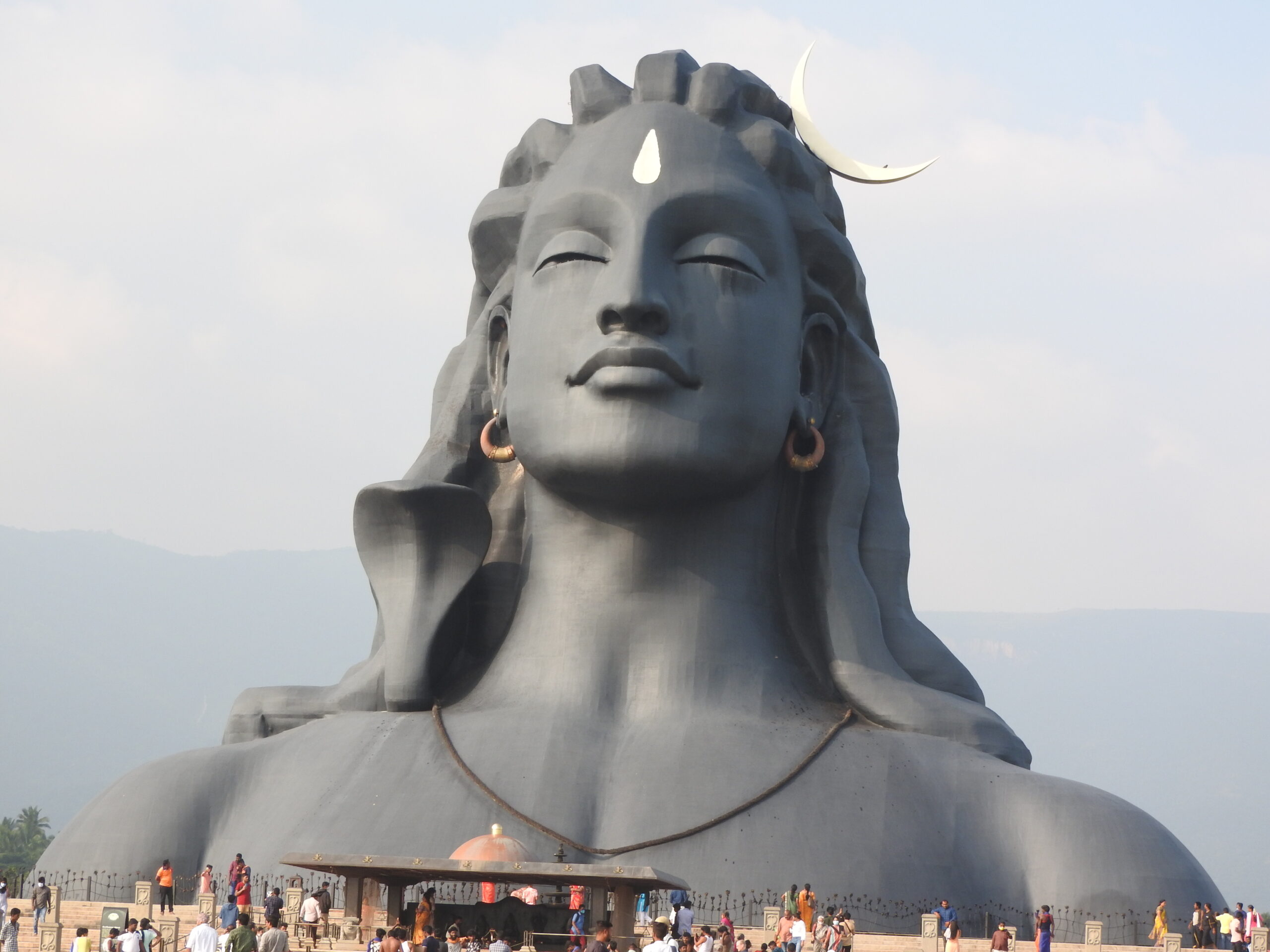
If you keep an Adiyogi statue at home, the tradition is simple. Face it east, toward the rising sun. Place it on a raised surface, a shelf or altar table, never on the floor. Keep the space around it clean and set apart. And know what it is: not an idol for formal puja like a Shivalinga, but a meditative focal point. Sitting before it in stillness, or chanting Om Namah Shivaya in its presence, is its natural use. A soft light behind it in the evening recreates something of the Coimbatore atmosphere after dark, which visitors describe as even more moving than the daylight view.
The greatest Shiva statues in the world
Human beings have always built large things for what they love most. Across India and Nepal, some of the largest sculptures ever created honour one being.
| Statue | Location | Height | Year | What makes it extraordinary |
| Statue of Belief, Viswas Swaroopam | Nathdwara, Rajasthan, India | 369 ft (112.5 m) | 2022 | The world’s tallest Shiva statue, visible for kilometres across the plains |
| Kailashnath Mahadev | Sanga, Nepal | 143 ft (44 m) | 2010 | Nepal’s tallest Shiva, white marble over the hills outside Kathmandu |
| Murudeshwara Shiva | Murudeshwara, Karnataka, India | 123 ft (37.5 m) | 2008 | On coastal cliffs, with the Arabian Sea behind him |
| Sursagar Shiva | Vadodara, Gujarat, India | 120 ft (37 m) | 2016 | Rising from the centre of a lake, appearing to float |
| Adiyogi | Coimbatore, Tamil Nadu, India | 112 ft (34 m) | 2017 | The world’s largest bust, Guinness record |
| Nataraja at CERN | Geneva, Switzerland | about 6.5 ft (2 m) | 2004 | Where ancient wisdom stands at the door of modern physics |
The Viswas Swaroopam deserves a special moment, because much of the world has not yet caught up with its existence. Completed in 2022 after more than a decade of construction, this 369-foot statue of Shiva seated in meditation in Nathdwara, Rajasthan, is the tallest Shiva statue on earth. It was shaped by the sculptor Naresh Kumawat with a team reported in the thousands, and on clear days it is visible from many kilometres away. It depicts Shiva exactly as the devotee’s heart most recognises him: seated in meditation, eyes closed, the universe at rest.
Someone might reasonably ask: why build something so enormous? A cup of water offered with a sincere heart is, in the Shiva tradition, as complete as any elaborate offering. But these great statues serve a different purpose: community and collective devotion. When hundreds of thousands gather around a sacred centre, something happens to the shared life of that community that no individual practice alone creates. These are not declarations of pride. They are declarations of love, at the largest scale human hands can manage.
Shiva in Modern Culture and Popular Spiritual Literature
Shiva has never been contained by temple walls. His stories have travelled through every medium available to human beings, and today that same unstoppable energy moves through novels, playlists, streaming queues, yoga festival stages and social feeds.
Amish Tripathi’s Shiva Trilogy
In 2010, a first-time author named Amish Tripathi published a novel no traditional publisher wanted. He self-financed it, sold copies from the back of his car, and then something extraordinary happened. Immortals of Meluha became a phenomenon, and the trilogy that followed has sold millions of copies, becoming one of the best-selling English-language series in Indian publishing history.
The trilogy reimagines Shiva not as a deity descending from the heavens but as a human being, a tribal warrior who gradually discovers he is the prophesied Neelkanth, destined to confront evil in an ancient civilisation:
| Book | Year | The story |
| Immortals of Meluha | 2010 | Shiva arrives in Meluha and discovers his destiny as the Neelkanth |
| The Secret of the Nagas | 2011 | The mystery of the serpent people deepens, and good and evil blur |
| The Oath of the Vayuputras | 2013 | The conclusion: Shiva fulfils his purpose, and the truth of the Somras is revealed |
One essential note: the trilogy is fiction, an imaginative reimagining, and Amish Tripathi is clear about this. It is not scripture or history. But as a doorway into curiosity about Shiva’s world, especially for younger readers and Western audiences, it is extraordinary. If someone you love is not yet drawn to sacred texts but loves a good story, hand them Immortals of Meluha. Let the story do the opening.
Devdutt Pattanaik’s 7 Secrets of Shiva
If the trilogy is the novel that pulls you in, Devdutt Pattanaik’s 7 Secrets of Shiva is the companion that helps you understand what you found. Pattanaik is India’s most widely read mythologist, a physician turned storyteller who decodes the symbolic truths encoded in Shiva’s iconography and stories: the secret of the ash-smeared body, the secret of Kailash, the secret of the linga, of Parvati, of Ganesha, of Kartikeya, of Nataraja.
His premise throughout is that myths are not false stories but symbolic truths, speaking in image and narrative precisely because some truths are too vast for direct statement. The book is illustrated, written in plain English, and the single best starting volume for an American reader new to Shiva’s world.
Boom Shiva and Bam Bam Bhole: the language of pure devotion
You have probably heard it at a yoga festival, on a playlist, or shouted joyfully by a crowd of pilgrims: “Boom Shiva!” “Bam Bam Bhole!” “Bol Bam!”
And you may have wondered what it actually means.
The answer is heartwarming. Bhole is one of Shiva’s most beloved names, and the tenderest of all. It comes from a root meaning innocent, simple-hearted, the easily pleased one. Bholenath, the innocent lord, is Shiva at his most accessible: he does not require elaborate ritual or spiritual credentials, and is moved by the most ordinary expression of genuine love.
Bam Bam is simply the sound of that love overflowing, a spontaneous exclamation when ordinary words feel insufficient. The Kanwariyas, the devotees who walk long distances each Shravan month carrying Ganga water on their shoulders to pour over Shivalingas, chant Bol Bam for hundreds of miles. The chant is what carries them.
It is not irreverence. It is the most natural, most honest form of love a heart can express. The next time you hear it, you will know what it means, and perhaps you will add your own voice.
Karthigai Deepam: the festival of Shiva as infinite light
Every year, in the month of Karthigai, November to December in the Tamil calendar, a massive beacon of fire is lit at the peak of Arunachala, the sacred hill at Tiruvannamalai that tradition teaches is Shiva himself. The beacon burns through the night, visible for miles, and across the state millions of small clay lamps are lit in every town and home.
This is Karthigai Deepam, the festival of lights of Shiva. It commemorates the Lingodbhava: Shiva appearing as the infinite column of fire between Brahma and Vishnu, declaring that the infinite cannot be measured or defeated, only surrendered to with love. Every lamp lit on that night is a personal echo of that cosmic light.
The great circumambulation of Arunachala, the Girivalam, a walk of about 14 kilometres, is performed by huge numbers of pilgrims on this night, barefoot, by lamplight. Tamil Hindu communities across the United States keep the tradition alive with lamp-lighting ceremonies at temples and homes, from Fremont to New Jersey to Houston.
Frequently Asked Questions About Lord Shiva
Is Lord Shiva a real historical figure or a mythological story?
Shiva exists on all three levels simultaneously, and that is not a contradiction but the most complete possible answer. As Adiyogi, yogic tradition holds that a living master sat in the upper Himalayas and transmitted the science of yoga to the seven sages. As Mahadev, he is the supreme deity of Shaivism, fully real within the devotional experience of hundreds of millions of worshippers. As Paramashiva, he is the metaphysical reality the Upanishads describe as the ground of all being. History, mythology and philosophy each speak to a different dimension of the same reality.
Why is Shiva called the destroyer? Is he dangerous?
No. In Vedic cosmology, Shiva’s role is samhara, dissolution and transformation. Winter dissolves summer so spring can arise. Sleep dissolves the waking day so the mind can renew. Shiva dissolves what is complete, stagnant or holding back new growth, at the cosmic level and the personal one. And consider: Shiva, who drank the Halahala poison into his own throat to protect creation, is not dangerous. He is the most selflessly protective force in the universe. Devotees who know him feel no fear, only trust.
Can women worship Lord Shiva and touch the Shivalinga?
Yes, with complete confidence. Shiva is the most gender-inclusive divine principle in the Hindu tradition. The Ardhanarishvara form, where Shiva’s own body is half-feminine, declares the divine feminine to be half of his own being. Women have been among Shiva’s most celebrated devotees: the Shiva Purana honours female devotion, and the great Tamil saint Karaikkal Ammaiyar is revered among the 63 Nayanars. Shivalinga abhishekam is welcomed from any sincere devotee. Restrictions at certain individual temples reflect those temples’ own customs, not Shiva’s nature.
What is the best day and time to worship Lord Shiva?
Any moment offered with genuine feeling is the right moment: Shiva is Bholenath, the easily pleased. That said, the tradition marks certain times. Monday, Somvar, is Shiva’s day, the moon being his own ornament. Pradosha, the 13th lunar day of each fortnight, and Masik Shivaratri, the monthly Shivaratri, are especially auspicious. The great night of the year is Maha Shivaratri, the 14th night of the waning moon in Phalguna, which falls in February or March; in 2027 it falls on Saturday 6 March. The best time of day is Brahma Muhurta, roughly 4:00 to 5:30 AM, or the night watches of Shivaratri itself.
What is the difference between Shiva, Rudra, Shankar and Mahadev?
All four names refer to the same divine reality, each illuminating a specific quality. Rudra is the fierce Vedic storm form, the force that breaks and renews. Shankar is the giver of peace, the benevolent, meditative, family-oriented form. Mahadev is the Great God, Shiva as supreme deity. And Shiva is the auspicious one, the formless, unmanifest pure consciousness. A simple way to hold them: Rudra is Shiva at his most fierce, Shankar at his most gentle, Mahadev at his most vast, and Shiva at his most fundamental.
What is the spiritual meaning of Maha Shivaratri?
Maha Shivaratri, the Great Night of Shiva, falls on the 14th night of the waning moon in Phalguna, February or March. The yogic tradition describes a natural upsurge of energy in the human system on this night, and the practice is to remain awake through the four watches of the night with the spine upright, meditating and chanting, so that the upsurge supports the inner journey rather than passing unnoticed in sleep. The night also commemorates, in different tellings, Shiva’s Ananda Tandava, his marriage to Parvati, and the appearance of the Jyotirlinga. Shiva temples across every major American city hold all-night programmes with chanting and abhishekam.
Is it good to keep an Adiyogi statue at home?
Yes. The Adiyogi functions differently from a deity idol: it is not worshipped with formal abhishekam but used as a meditative focal point. Face it east, place it on a raised surface in a clean corner, keep the space uncluttered, and add a soft light in the evening. Five quiet minutes before it in the morning, or chanting Om Namah Shivaya in its presence, is its natural practice. It is especially meaningful in a meditation room or yoga space.
What is the difference between the Shiva Purana and the Linga Purana?
Both are foundational Shaiva scriptures with different purposes. The Shiva Purana, 24,000 verses in seven samhitas, is the complete account: Shiva’s marriages and battles, the origin of the Jyotirlingas, the stories of his devotees, the philosophy of liberation, the science of linga worship. The Linga Purana, about 11,000 verses, is the specialised text: the linga’s cosmic origin, its forms, its installation and worship. In short, the Shiva Purana is the complete story and knowledge of Shiva; the Linga Purana is the dedicated scripture of the linga.
What is the significance of the Rudraksha in Shiva worship?
The Rudraksha is the sacred seed of the Elaeocarpus ganitrus tree, found in the Himalayan foothills of India and Nepal. According to the Shiva Purana, Rudraksha beads were born from Shiva’s tears, tears of compassion for beings still caught in the cycle of birth and death. Worn as a mala, they are the traditional counting tool for Om Namah Shivaya and the Maha Mrityunjaya. The five-faced bead, the Panchamukhi, is the most common form and appropriate for everyone.
Embracing Shiva in Everyday Life: A Living Practice for Modern Devotees
You have travelled a long way in this guide.
From the Himalayas where the first yogi sat, to the burning ghats of Kashi where every soul finds liberation. From the cosmic dance of Nataraja recognised by physicists, to the tender face of Baal Shiv. From the 24,000 verses of the Shiva Purana to the 77 sutras on a Kashmiri rock, to the one mantra that contains all of it in five syllables.
Now the question that matters most: what do you do with it when you walk out your door tomorrow morning?
You do not need Varanasi. You do not need Kailash.
Both are extraordinary. If you can visit them in this lifetime, go. But Shiva is not waiting only at the foot of a Himalayan mountain or on the banks of the Ganges.
The Shiva Purana says something so simple and so radical that it stops you in your tracks when you truly hear it: Shiva is pleased by the most ordinary offering made with the most genuine heart. One cup of water. One Bilva leaf. One sincere whisper of Om Namah Shivaya. That is enough. That has always been enough.
The distance between you and Shiva is not measured in miles. It is measured in attention.
Five practices that fit real American life
- Practice one: five minutes before the world begins. Before your phone, before the news, before coffee, sit quietly for five minutes and chant Om Namah Shivaya, 27 or 108 times, or simply for five minutes by the clock. Those minutes, offered before the noise begins, set a tone for the entire day.
- Practice two: a sacred corner and a cup of water. Find one corner, a shelf, a windowsill, and make it sacred: a linga, a Narmada stone, an image of Mahadev. Each morning, offer a glass of water while chanting. Pour it slowly. The water is a symbol; the attention is the real offering.
- Practice three: Monday as a sacred reset. Monday belongs to Shiva. Set an intention for the week. If your health permits, keep a simple fast, fruit or liquids or one meal set aside. If there is a temple within driving distance, and in most American cities there is, go on a Monday morning and stand before the linga.
- Practice four: the evening lamp. Light a small ghee lamp near your sacred corner each evening and watch the flame for thirty seconds. Fire is the one element that gives without diminishing: the lamp that lights another lamp loses none of its own light. That is the teaching you offer yourself each time you light it.
- Practice five: fifteen minutes of sacred reading each week. One passage from the Shiva Purana, the Shiva Sutras or the Vigyana Bhairava Tantra, read slowly enough to feel it. Keep a notebook. When a line stops you, write it down. Over the years, the notebook becomes your own record of the conversation. If your heart is turning toward pilgrimage, the same slow preparation applies: our guide to preparing spiritually for a Kailash yatra, and our honest month-by-month guide to the best time to travel, are written for exactly that quiet stage of the journey.
The one thing that opens every door
Here is the truth all of this has been pointing toward.
Shiva does not require your perfection.
He does not need you to have mastered Sanskrit, or memorised the Shiva Purana, or performed a flawless Rudrabhishek with every ingredient in order. The one thing, the only thing, that opens every door is called bhava: genuine feeling, sincere love, authentic longing.
A devotee who pours one cup of water over a river stone with a completely present heart is infinitely closer to Shiva in that moment than someone performing an elaborate ritual while composing a grocery list.
You already have everything you need.
A final word
This guide was written for you, whether you have been chanting Om Namah Shivaya since childhood or met Shiva’s name for the first time in these pages. Whether you live five minutes from a temple or five thousand miles from India. Whether your practice is elaborate, or one smooth stone on a windowsill and five minutes of quiet in the morning.
Lord Shiva, the Adiyogi who transmits, the Mahadev who loves, the Paramashiva who simply is, receives all of it. He always has.
And if these pages have done their work, somewhere along the way you may have noticed something quietly forming: a wish, perhaps, to see the mountain where he sits. When that wish becomes a plan, you will not be the first pilgrim we have walked with, and you will not walk alone. Until then, the practice is the same for all of us, in Chicago, in Houston, in Kathmandu: five syllables, one cup of water, and a sincere heart.
May the grace of Adiyogi illuminate your path. May the stillness of Kailash settle into your heart. May Om Namah Shivaya be not just words on your lips but a living truth in every breath you take.
Har Har Mahadev.
Related Guides
- Why Is Mount Kailash Sacred? The Four Faiths, One Mountain
- Mount Kailash Sacred Geography: The Land and Its Meaning
- Lake Mansarovar: Meaning, Puja and Sacred Water
- The Kailash Kora: Distance, Duration and Difficulty
- Spiritual Preparation for a Kailash Mansarovar Yatra
- Kathmandu Before Kailash: The Opening Chapter
- Best Time to Visit Kailash Mansarovar: The Honest Month-by-Month Guide
- Our journeys to Mount Kailash and Lake Mansarovar