
A compact Simikot-based Kailash route from Kathmandu and back.
Remote Simikot Pilgrimage
Mount Kailash & Lake Mansarovar Darshan via Simikot–Lapcha Syar
An 11-day Nepal-side Kailash Yatra through Kathmandu, Nepalgunj, Simikot, remote Humla camps, Nyalu La Pass and the Lapcha Syar viewpoint. This route stays inside Nepal — no Tibet permit, no kora — and offers darshan of Mount Kailash and Lake Mansarovar from one of the few viewpoints in Nepal, while still respecting altitude, weather and remote camping conditions.
Trip Notice
This is a Nepal-side yatra: it does not cross into Tibet and does not visit the shores of Lake Mansarovar. Darshan of Kailash and the lake is from the Lapcha Syar viewpoint, subject to weather and visibility, and the route does not depend on any border crossing. Flight timing, camp locations, road access, restricted-area permits and visibility depend on weather, local rules and group health. Final operating details are confirmed before departure.
The Trip Facts
What this remote route asks from you.
This is a high-altitude Simikot route with flights, remote overland travel, tented camps and sacred darshan focus. It is not the full Kailash Kora route.
The yatra begins and ends with airport support in Kathmandu.
All meals (breakfast, lunch and dinner) included throughout, including Kathmandu.
Domestic flights lead to Simikot before the remote overland route begins.
The Lapcha Syar viewpoint and Nyalu La Pass are the highest points.
No full kora, but altitude, camping, rough roads and remoteness are serious.
Best available hotels in Kathmandu and Simikot, with fully equipped high-altitude tented camps.
Lapcha Syar is planned for powerful views of Kailash, conditions permitting.
- Simikot flight route
- Remote Humla overland journey
- Nyalu La Pass crossing
- Lapcha Syar Kailash darshan
- Tented camp experience
- Puja and Havan at Lapcha Syar
- Full-board meals
- No Tibet permit needed
Pilgrims seeking Kailash darshan through the remote Simikot route. Travellers who do not want the full Dolma La kora itinerary. Devotees interested in puja, havan and spiritual activities near Kailash views. Groups comfortable with camping, high altitude and rugged mountain roads. Pilgrims who cannot enter Tibet, or who prefer to stay on the Nepal side.
This route avoids the full kora, but still has altitude, camping and remote-road challenges. Share your age, health and comfort needs before choosing.
Ask a Kailash expertSacred Geography
Kailash darshan through the quiet highlands of Humla.
This itinerary approaches Kailash through Simikot and remote Himalayan valleys, staying inside Nepal, with sacred focus on the Lapcha Syar viewpoint, Mount Kailash and Mansarovar darshan, puja and high-altitude spiritual practice.
Why this Simikot route is different
The Kailash Yatra via Simikot is not the same as the full Kailash Mansarovar Kora route through Darchen and Dolma La. It is also not a simple sightseeing tour. It is a remote high-altitude pilgrimage that uses Simikot as the gateway into the far western Himalayan landscape, then moves through rugged valleys, high passes, tented camps and sacred viewpoints connected with Mount Kailash and Lake Mansarovar. The entire route stays inside Nepal — no border crossing, no Chinese visa, no Tibet permits. Read More
Package Rhythm
A remote route built around darshan.
The journey moves from Kathmandu’s sacred sites to Simikot, highland camps, Nyalu La, Lapcha Syar darshan and return.
Prepare
Kathmandu gives sacred orientation through Buddhist sites, Vishnu darshan and Pashupatinath.
Enter
Nepalgunj and Simikot move the yatra into remote Humla and the highland route.
Rise
Tsongsa, Nyalu La and Tupling/Jakpling bring camping, altitude and rugged mountain travel.
Receive
Lapcha Syar shapes the journey around Kailash and Mansarovar darshan, puja and stillness.
Sacred Map
Kathmandu to Kailash view by Simikot.
A compact route map for the Nepal-side Simikot approach through Humla, Tsongsa, Nyalu La, Tupling/Jakpling and the Lapcha Syar darshan viewpoint.
Outward route
Day 01-02
Day 03
Day 04
Day 05
Day 06-07
Kathmandu prep
Altitude
Day 01-02 · approx. 1,400m
Sightseeing + briefing
Simikot flight
Altitude
Day 03 · approx. 2,910m
Humla gateway
Tsongsa camp
Altitude
Day 04 · approx. 4,200m
Rejoin point
High camp
Nyalu La Pass
Altitude
Day 05 · approx. 5,000m
High pass route
Lapcha La Syar
Altitude
Day 06-07 · approx. 4,900–5,100m
Kailash viewpoint
Distant Darshan
Distant Kailash Darshan
Lapcha La Syar
Return route
Day 08
Day 10
Day 11
Tsongsa Return
Day 08
Return to Tsongsa
Rejoins Tsongsa camp
Kathmandu return
Altitude
Day 10 · 1,350m
Flights back
Final departure
Day 11
Airport transfer
Investment & Departure
Cost, dates and 2027 departures.
Prices are confirmed with your departure choice and group size. The 2027 dates below are set group departures, including full-moon dates timed for the Lapcha Syar darshan window.
Remote route through Simikot, Tsongsa, Nyalu La and Lapcha La Syar with camping support.
Upgraded support and camp planning where available, with stronger pre-trip guidance.
Private or small-group route with pace, camp comfort and ritual planning reviewed before confirmation.
May 2027
3 departures
June 2027
3 departures
July 2027 3 departures
August 2027 3 departures
Remote camping logistics, domestic flights, support staff and route permits require advance planning. Final payment rhythm is shared with the confirmed departure program.
Route access, restricted-area permits, lake or viewpoint rituals, weather and visibility must be confirmed before departure. Kailash or Mansarovar views cannot be guaranteed.
Pilgrimage Timeline
Eleven days through Simikot, camps and Kailash darshan Detailed Itinerary.
This itinerary follows a remote Nepal-side Simikot route with highland camps, Nyalu La Pass, the Lapcha Syar viewpoint, darshan and spiritual activities. Road, camp and darshan arrangements depend on permits, weather and conditions.
Chapter 1 — Kathmandu Sacred Preparation
Day 1 Arrival in Kathmandu and Yatra Briefing
The yatra begins in Kathmandu, where the prayer takes practical shape. For many pilgrims, Kailash has lived in the heart long before the airport arrival. This day gives the journey its first ground.
Upon arrival at Tribhuvan International Airport, you are welcomed and transferred to your hotel by private vehicle. After check-in, you can rest and recover from the journey. In the evening, you may walk through Thamel, where markets, cafés, trekking shops and handicraft stores help travellers prepare for the Himalayan route ahead.
A short briefing introduces the Kailash Yatra, the Simikot route, the remote camping section, high passes, expected comfort level and the importance of altitude awareness.
Kathmandu is the most comfortable part of the journey. Use the hotel stay to organize bags and rest. Meals follow the final program; do not assume all Kathmandu meals are included unless stated.
Check your warm layers, personal medicines, walking shoes, sleeping/camping items if required, power bank, snacks and documents.
Altitude
approx. 1,400m
Stay
Kathmandu hotel
Meals
Full board (arrival day)
Note
Arrival and briefing
Day 2 Sacred Kathmandu Tour and Pashupatinath Aarati
This day prepares the heart before the route turns remote. Kathmandu brings together Buddhist prayer, Vishnu devotion and Shiva worship before the pilgrim moves toward Kailash darshan.
After breakfast, the day begins at Swayambhunath Stupa, one of Nepal’s oldest UNESCO World Heritage Sites. From its hilltop, the Kathmandu Valley opens below, while prayer flags, stupas and turning wheels create a calm spiritual atmosphere.
You continue to Budhanilkantha Temple, where Lord Vishnu is seen reclining on a bed of serpents. Later, you visit Boudhanath Stupa, one of the largest Buddhist stupas in the world and an important centre of Tibetan Buddhist prayer.
The day concludes at Pashupatinath Temple, Nepal’s most revered Shiva temple. For Kailash pilgrims, this visit holds special meaning. The evening Sandhya Aarati, with sacred fire, chanting and devotion by the Bagmati River, can become one of the emotional openings of the journey.
These are living sacred places. Dress respectfully, follow photography rules, keep silence where needed and observe cremation areas at Pashupatinath from a respectful distance.
Return to the hotel after sightseeing. Meals are on full-board basis. Use the evening to prepare for the flight route.
Do not overexert yourself in the city. Tomorrow begins the movement toward Nepalgunj and Simikot.
Altitude
approx. 1,400m
Stay
Kathmandu hotel
Meals
Full board
Note
Sacred sightseeing
Chapter 2 — Simikot Gateway and Highland Camps
Day 3 Fly from Kathmandu to Nepalgunj and Simikot, Gateway to Humla
The journey leaves Kathmandu’s sacred city rhythm and enters the remote Himalayan approach. Simikot is where this route begins to show its true character.
After breakfast, you transfer to the domestic airport for the flight to Nepalgunj. From Nepalgunj, you connect onward to Simikot, the gateway to the remote Humla region. After checking into the hotel, the rest of the day is for acclimatization and local exploration.
A detailed briefing prepares the group for the overland route ahead: Tsongsa, Nyalu La, Tupling/Jakpling, Lapcha Syar, camps, weather and the spiritual activities planned in the highlands.
Simikot is rugged, remote and surrounded by mountain landscapes. It is not only a transit point; it is where pilgrims begin to understand the less common route toward Kailash darshan. Weather and flight timing can be part of the experience.
Accommodation is simpler than Kathmandu. Meals are on full-board basis. Keep luggage organized for the road/camping section.
Simikot is around 2,910m. Walk slowly, hydrate and watch how the body responds to the first altitude shift.
Altitude
approx. 2,910m
Stay
Best available Simikot lodge
Meals
Full board
Note
Flight and acclimatization
Day 4 Drive from Simikot to Tsongsa Camp
The overland expedition begins. This is where the comfort of airports and hotels gives way to remote valleys, rough tracks and highland camps.
After breakfast, you drive toward Tsongsa, described as the base camp below Nyalu La Pass. The route passes through remote Himalayan landscapes, alpine valleys and rugged mountain terrain. This day prepares the group for higher passes and camp-based travel.
Tonight, you experience camping in the high Himalayas under a wide mountain sky.
Tsongsa is important because it positions the group before Nyalu La. The place may not be famous like Mansarovar, but it matters in the body’s journey. It is an acclimatization and camping step before going higher.
This is a tented-camp night. Comfort is practical, not hotel-style. Meals are on full-board basis. Warm clothing, personal torch/headlamp and camping discipline are important.
The altitude rises to around 4,200m. Move slowly at camp, keep warm and report headache, nausea, dizziness or unusual tiredness early.
Altitude
approx. 4,200m
Stay
Tented camp at Tsongsa
Meals
Full board
Note
High camp night
Day 5 Cross Nyalu La Pass to Tupling and Jakpling
This is the high-pass day of the route. Nyalu La opens the journey into a wider, colder and more dramatic Himalayan landscape.
After breakfast, the drive continues across Nyalu La Pass, listed at about 5,000m. The pass offers wide mountain views when weather is clear. After crossing, the route descends into Talung Valley.
The itinerary includes visits to Seliman Lake and Talung Lake. These clear, quiet lakes give time to pause, photograph, breathe and take in the highland environment before reaching Tupling or Jakpling for the night.
Nyalu La is one of the most important physical points of this itinerary. It gives a sense of the altitude and ruggedness that define the Simikot route. Seliman and Talung lakes add stillness to the day, reminding pilgrims that sacred journeys are shaped not only by temples but by land, water, sky and silence.
Overnight stay is in the tented camp at Tupling/Jakpling. Meals are on full-board basis. Expect cold conditions and simple facilities.
Crossing 5,000m is serious even if the movement is by vehicle. Avoid running, jumping or overexertion at viewpoints. Keep warm and breathe slowly.
Altitude
approx. 4,300m overnight; Nyalu La approx. 5,000m
Stay
Tented camp, Tupling/Jakpling
Meals
Full board
Note
Nyalu La crossing
Chapter 3 — Lapcha Syar and Spiritual Practice
Day 6 Drive to the Lapcha Syar Darshan Viewpoint
This is one of the most important darshan days of the yatra. Lapcha Syar brings pilgrims to a high viewpoint connected with views of Mount Kailash and Lake Mansarovar, weather permitting.
After an early breakfast, you drive to Lapcha Syar. The drive may be shorter than previous days, but the altitude is high and the place is spiritually significant. From here, pilgrims may receive panoramic views of the southern face of Mount Kailash and the waters of Lake Mansarovar when visibility allows.
The rest of the day is spent in the peaceful atmosphere, preparing for the puja, havan and spiritual activities planned for the next day.
Lapcha Syar is the heart of this route because it gives a darshan-focused experience. Unlike the full kora itinerary, this route’s power comes through highland approach, viewpoint, prayer and stillness. A clear view is a blessing, but not something any operator can guarantee.
The stay is remote and high. Meals are on full-board basis. Warm clothing and wind protection are essential.
At around 5,000m, even small movement can feel harder. Rest, hydrate and avoid unnecessary exertion.
Altitude
approx. 4,900–5,100m
Stay
Tented camp near Lapcha Syar
Meals
Full board
Note
Kailash viewpoint day
Day 7 Kailash and Mansarovar Darshan, Puja and Havan
This is the spiritual centre of the itinerary. The route gives time not only to see, but to pray.
The day is dedicated to the sacred darshan of Mount Kailash and Lake Mansarovar from Lapcha Syar. Subject to weather and visibility, you receive panoramic views of the southern face of Kailash and the lake across the border, then participate in Puja, Havan, Bhajan-Kirtan, meditation and spiritual activities. Pilgrims may gather with their offerings, family prayers and personal intentions. This slower day allows the group to absorb the atmosphere instead of rushing to the next stop.
Puja and havan in such a landscape should be approached with cleanliness, respect and simplicity. Bhajan-kirtan and meditation are not only group activities; they help pilgrims bring the heart into alignment with the place.
The group remains in the same remote highland setting. Meals are on full-board basis. Facilities are camp-based and simple.
This is also an acclimatization and weather-contingency day. Rest is useful. Avoid overexertion during rituals and keep warm during long outdoor periods.
Altitude
approx. 4,900–5,100m
Stay
Tented camp near Lapcha Syar
Meals
Full board
Note
Darshan, puja and havan day
Day 8 Final Darshan and Drive back to Tsongsa
The highland section closes with a farewell darshan. Leaving a sacred viewpoint can feel heavier than arriving — many pilgrims understand the mountain only while saying goodbye.
You rise early for a final opportunity of Kailash and Mansarovar darshan from Lapcha Syar, with prayers and puja at the viewpoint. After the farewell rituals, the group begins the return journey.
The drive backtracks through the remote Himalayan landscape toward Tsongsa, where you rest after the high-altitude journey. The day carries quiet emotion and physical demand together — the highland route is still high on the way down.
A final darshan is not a smaller thing than the first. Weather and visibility still decide what the eyes receive. Let the goodbye be unhurried, and follow the guide’s timing for the return drive.
Return to the tented camp at Tsongsa. Meals are on full-board basis. After high-altitude days, deep rest matters.
The route descends, but fatigue from days above 4,900m can be strong. Hydrate, keep warm in the vehicle and report any lingering symptoms.
Altitude
Tsongsa approx. 4,200m
Stay
Tented camp at Tsongsa
Meals
Full board
Note
Final darshan day
Chapter 4 — Return to Simikot and Kathmandu
Day 9 Return Drive from Tsongsa to Simikot
The remote section begins to close. The return to Simikot gives the body a descent and the mind time to hold what happened in the highlands.
After breakfast, you drive back to Simikot. On arrival, check into the hotel and enjoy free time to explore the local market, purchase small souvenirs or rest after the overland expedition.
Returning to Simikot can feel like re-entering a more settled world after days of camping and high passes. It is also the flight gateway back to Kathmandu, so weather awareness remains important.
Hotel/lodge stay in Simikot. Meals are on full-board basis. This is a good time to reorganize luggage before flights.
The descent may feel relieving, but fatigue can still be strong. Rest and avoid assuming the journey is over too early.
Altitude
approx. 2,910m
Stay
Simikot hotel/lodge
Meals
Full board
Note
Return to Simikot
Day 10 Fly from Simikot to Kathmandu via Nepalgunj
The mountain route gives way to the flight route back to Kathmandu. The yatra begins to close, but weather and flight timing still need patience.
Depending on the flight schedule, you board the morning flight from Simikot to Nepalgunj, then connect onward to Kathmandu. On arrival, transfer to the hotel and enjoy your final evening in Nepal.
If time permits, pilgrims may revisit Pashupatinath Temple, explore local markets or join a farewell dinner celebrating the completion of the pilgrimage.
Simikot flights are weather-sensitive. Delays can happen. International flight connections should be planned with buffer time.
Kathmandu hotel comfort can feel welcome after the camping route. Meals are on full-board basis, including in Kathmandu.
Rest after arrival. The body may still feel the effect of altitude, camping and road travel.
Altitude
Kathmandu approx. 1,400m
Stay
Kathmandu hotel
Meals
Full board
Note
Returning by flight may be quick, but the mind may need more time to return.
Day 11 Final Departure from Kathmandu
The formal itinerary ends, but the memory of Kailash darshan, high camps, prayer and mountain silence travels home with the pilgrim.
After breakfast, enjoy leisure time depending on your international flight schedule. A representative transfers you to Tribhuvan International Airport approximately three hours before departure.
This route may not be the standard full kora path, but it carries its own power: Kathmandu prayer, Simikot remoteness, Nyalu La, high camps, Lapcha Syar, sacred rituals and the hope of Kailash and Mansarovar darshan. For many pilgrims, that is enough to create a lifelong memory.
Breakfast is included as per your flight time. Keep passport, tickets, baggage and sacred items ready.
Altitude
approx. 1,400m
Stay
Departure day
Meals
Breakfast (as per flight)
Note
Final airport transfer
What Is Included
Flights, camps and remote-route support.
From Simikot flights and Humla permits to tented camps, full-board meals and puja arrangements — what this Nepal-side journey covers. Read both lists before you book.
Included
Included with your yatra
- Airport arrival and departure transfers in Kathmandu.
- Best available accommodation in Kathmandu and Simikot, twin/double-sharing.
- Fully equipped tented camps, with tents and basic camping facilities, during the Humla–Lapcha Syar journey.
- Full-board meals (breakfast, lunch and dinner) throughout, including Kathmandu and Simikot.
- Domestic flights: Kathmandu–Nepalgunj–Simikot–Nepalgunj–Kathmandu.
- Private/group transportation for the Humla overland journey.
- Experienced local guide and support staff.
- Humla/Limi restricted-area permits and required local permits.
- Applicable local government and entry fees for the scheduled route.
- Puja and Havan arrangements at Lapcha Syar.
- Emergency oxygen and basic first-aid kit carried with the team.
- Government taxes and applicable service charges.
- Pre-departure briefing and trip coordination.
Plan separately
Not included
- International airfare to and from Kathmandu.
- Nepal visa fees.
- Travel insurance, including high-altitude evacuation coverage.
- Personal medical expenses, medicines, and emergency evacuation or rescue costs.
- Monument and heritage-site entrance fees in Kathmandu.
- Personal expenses such as laundry, telephone, internet and shopping.
- Alcoholic and bottled drinks.
- Tips and gratuities for guides, drivers, porters and support staff.
- Personal porter or additional porter services, unless specifically arranged.
- Extra accommodation or meals caused by flight cancellations, weather, road closures, illness or unforeseen circumstances.
- Expenses arising from itinerary changes beyond our control.
- Personal donations and religious offerings.
- Any services not specifically mentioned under inclusions.
Altitude & Camping
A gentler sacred goal, but not an easy route.
The route may avoid the full Kailash Kora, but it still includes remote high-altitude camping, cold nights and limited facilities.
Simikot adjustment
For elders on this remote route, the five ways and the family conversation decide the pacing. The senior guide carries the honest map.
Senior guideTsongsa camp
The first tented camp at about 4,200m. Full equipment and crew provided. Your sleeping-bag liner is the one item to pack.
Packing listMedical limits
The medical appointment is the first act of respect for this route. Remote Humla has the highest evacuation threshold in our portfolio.
Medical guideEmergency oxygen
Carried with the camp team at every stop. The oxygen guide explains what it does and what it cannot do at altitude.
Oxygen guideMedical limits
Travel insurance and evacuation costs are excluded. Pilgrims with health concerns should consult a doctor before booking.
Medical prepInsurance
Remote-area evacuation is the insurance question for this route. The two phrases that must appear: high-altitude trekking and emergency evacuation.
Insurance guidePermits & Access
Nepal-side permits — no Tibet visa.
This route stays inside Nepal. It needs Humla restricted-area permits, which we arrange — not a Chinese visa or Tibet permit.
Humla permits
Nepal's Restricted Area Permit for Humla, the TIMS card and the Humla Conservation fee are included. No Chinese visa, no Tibet permits.
Visa guideDocuments checklist
The printable checklist for Nepal-side travel: passport, insurance, doctor's letter, cash in two currencies.
DocumentsBest time for flying
The Nepalgunj-Simikot corridor is the most weather-sensitive in our portfolio. Spring and early summer are the most stable windows.
Best time guideKathmandu before the flight
The sacred city day and the briefing morning are the first act of the journey. The Kathmandu guide carries the arrival design.
Kathmandu guideConnectivity and cash
The Humla corridor is the quietest in our portfolio. The connectivity ladder and the yuan-rupee cash plan are on this page.
Internet guideSpiritual preparation
A yatra begins with intention, family blessing, discipline and surrender. The closing guide prepares the heart for the viewpoint.
Spiritual guideBefore You Choose
This is not the standard Kailash Kora route.
This route is built around remote access, highland camps and Lapcha Syar darshan — entirely on the Nepal side. It must be chosen with clear expectations.
Darshan focus
This journey receives Kailash darshan from the Lapcha Syar viewpoint inside Nepal. The Darshan Hub maps every way to receive the mountain without the kora.
Darshan guideRemote camping
Tented camps at Tsongsa, Tupling and Jakpling, and below Lapcha Syar, with our own crew. The most expedition-feeling nights in our portfolio.
Stay guideHigh passes
The route climbs through camps at 4,200 and 4,300m to the Lapcha Syar viewpoint at 4,900 to 5,100m. The build is road-based and slow.
Altitude guideFlight dependence
Nepalgunj-Simikot flights are weather-sensitive. This is the most flight-dependent journey in our portfolio. Buffer days are essential.
Delays guideDarshan honesty
No kora, no lake visit, no Tibet entry. The darshan is real and complete, and the honest version is on this page.
Route guideThe sacred mountain
Why is this mountain sacred to four faiths? The doctrine page gives each tradition its own room.
Why sacredPilgrim Reviews
Stories from the quiet Simikot route.
Read how pilgrims describe the remote Humla approach, high camps, Lapcha Syar, spiritual activities and the stillness of seeking Kailash darshan away from the standard route.
5 ★
100%
4 ★
0%
3 ★
0%
2 ★
0%
1 ★
0%
Based on 3 published pilgrim reviews
“The Luxury Kailash Mansarovar Yatra exceeded every expectation I had. From the moment I arrived, the entire journey was organized with remarkable professionalism, attention to detail, and genuine care for every traveler. The accommodations throughout the trip were comfortable and carefully selected,…”
“The mountain did not feel far away. It felt anciently near.”
Route Gallery
Simikot, high camps and Kailash darshan.
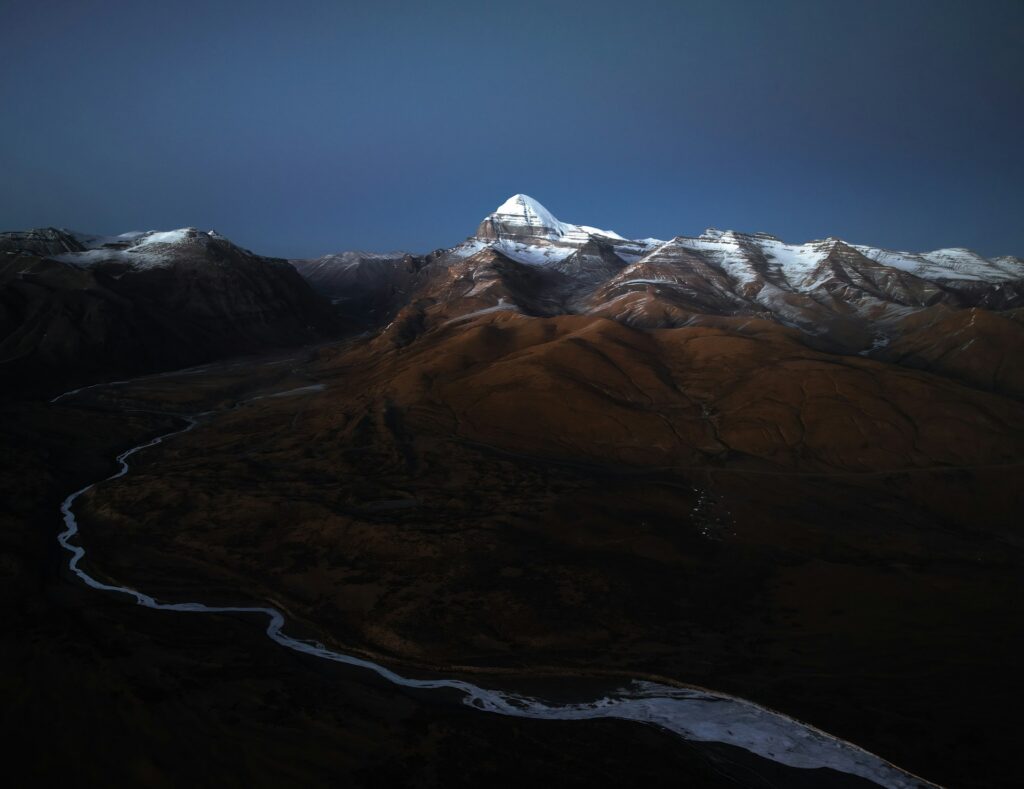
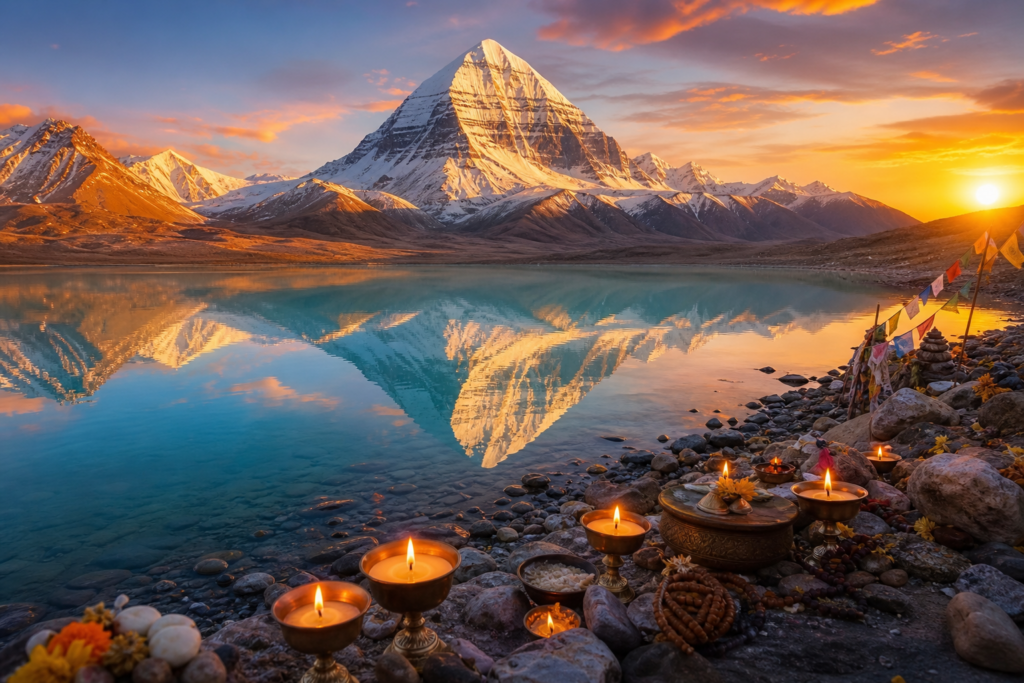
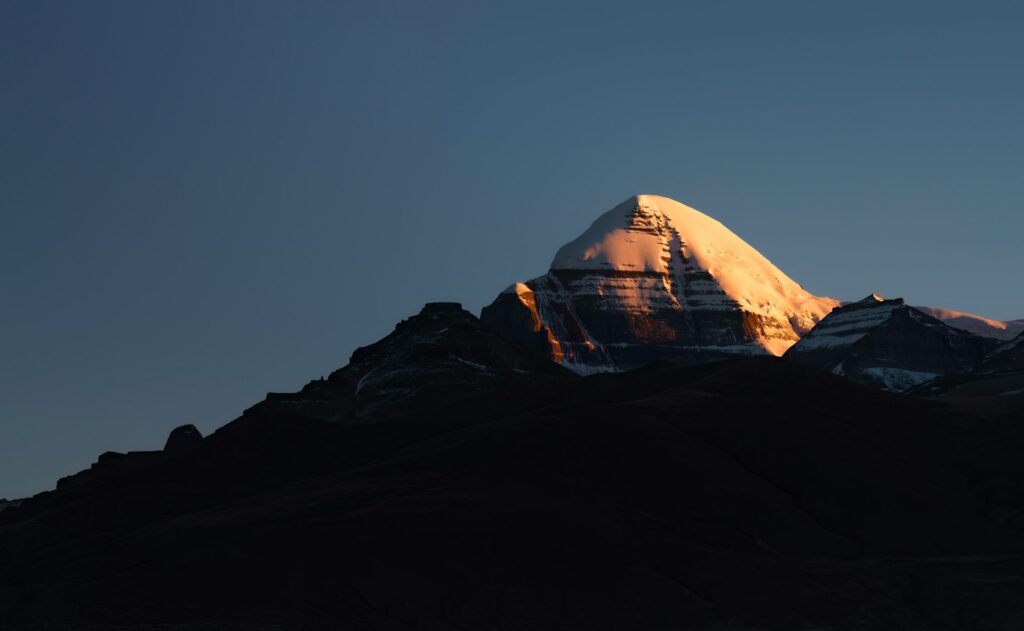
View the remote mountain route: Simikot, Tsongsa camp, Nyalu La, alpine lakes, Lapcha Syar, ritual spaces and the rugged beauty of this darshan-focused yatra.

Package FAQs
Before you choose the Simikot darshan yatra.
Clear answers on what this Nepal-side darshan route includes — Lapcha Syar views, camping, permits, meals — and what it does not.
Does this itinerary include the full Kailash Kora?
No. This is a darshan-focused route. It does not include the Kailash Kora, Dolma La or the parikrama circuit — the journey is built around viewpoint darshan, puja and highland camping.
Is this route easier than the full Kailash Kora route?
It may avoid the full kora, but it is not easy. The route includes flights, remote roads, camping, high passes around 5,000m and limited facilities. It is better described as a remote darshan and ritual route rather than an easy Kailash trip.
What is special about Lapcha Syar?
Lapcha Syar is one of the spiritual high points of the itinerary. From this high viewpoint, pilgrims may receive views of Mount Kailash and Lake Mansarovar when weather is clear. Visibility cannot be guaranteed.
Are tents and camping gear included?
Yes — tents, basic camping facilities, camping logistics and support staff are included, along with best available hotels in Kathmandu and Simikot. Bring your personal clothing and gear; we share a packing list before departure.
What happens at Lake Mansarovar on this route?
Lake Mansarovar is seen from the Lapcha Syar viewpoint, lying across the border in Tibet, weather permitting. This route does not visit the lake’s shores, does not include a holy bath, and does not cross into Tibet. Distant darshan of the lake and Kailash together is the sacred focus of this journey.
Do I need a Tibet/China visa for this yatra?
No. This route stays entirely inside Nepal. No Chinese visa or Tibet permit is needed — only your Nepal visa and the Humla/Limi restricted-area permits, which we arrange and include.
What happens if flights or roads are delayed?
Extra accommodation or transportation costs caused by flight delays, weather, road blocks, natural disasters, political situations or other conditions beyond the organizer’s control are excluded. Travellers should keep buffer time.
Is this suitable for senior citizens?
Some senior pilgrims may prefer a route without full kora, but this itinerary still includes high altitude, camping and remote travel. Seniors should consult their doctor and speak with the team before booking.
Can Mount Kailash really be seen from Nepal?
Yes. From the Lapcha Syar viewpoint in Nepal’s Humla region, close to the Tibet border, the southern face of Mount Kailash and Lake Mansarovar can both be seen when the weather is clear. It is one of the few places in Nepal with this view. Visibility depends on clouds and weather, which is why the itinerary gives a full day at the viewpoint.
Package enquiry
Ask before you book.
A Kailash yatra should be chosen with care, not rushed like an ordinary tour. Start with a conversation so we can understand your route, body, passport, time and prayer.
Share your age, health concerns, passport nationality, preferred month, group size and whether you hope to complete the kora. We will help you compare the right package, departure window and level of support before you confirm.
The first step
Begin with one careful conversation.
Tell us who is travelling, when you hope to go and what kind of Kailash experience you are seeking. We will help you compare the route, altitude, permits and support before you commit.
Choose your yatra with care.
Select a convenient consultation time and share the details that matter to you. Our Kailash specialist will help you assess the right route, altitude pacing and level of support before you make a decision.
Ask a Kailash Expert
Ask your question and receive clear, considered guidance from our yatra team.